
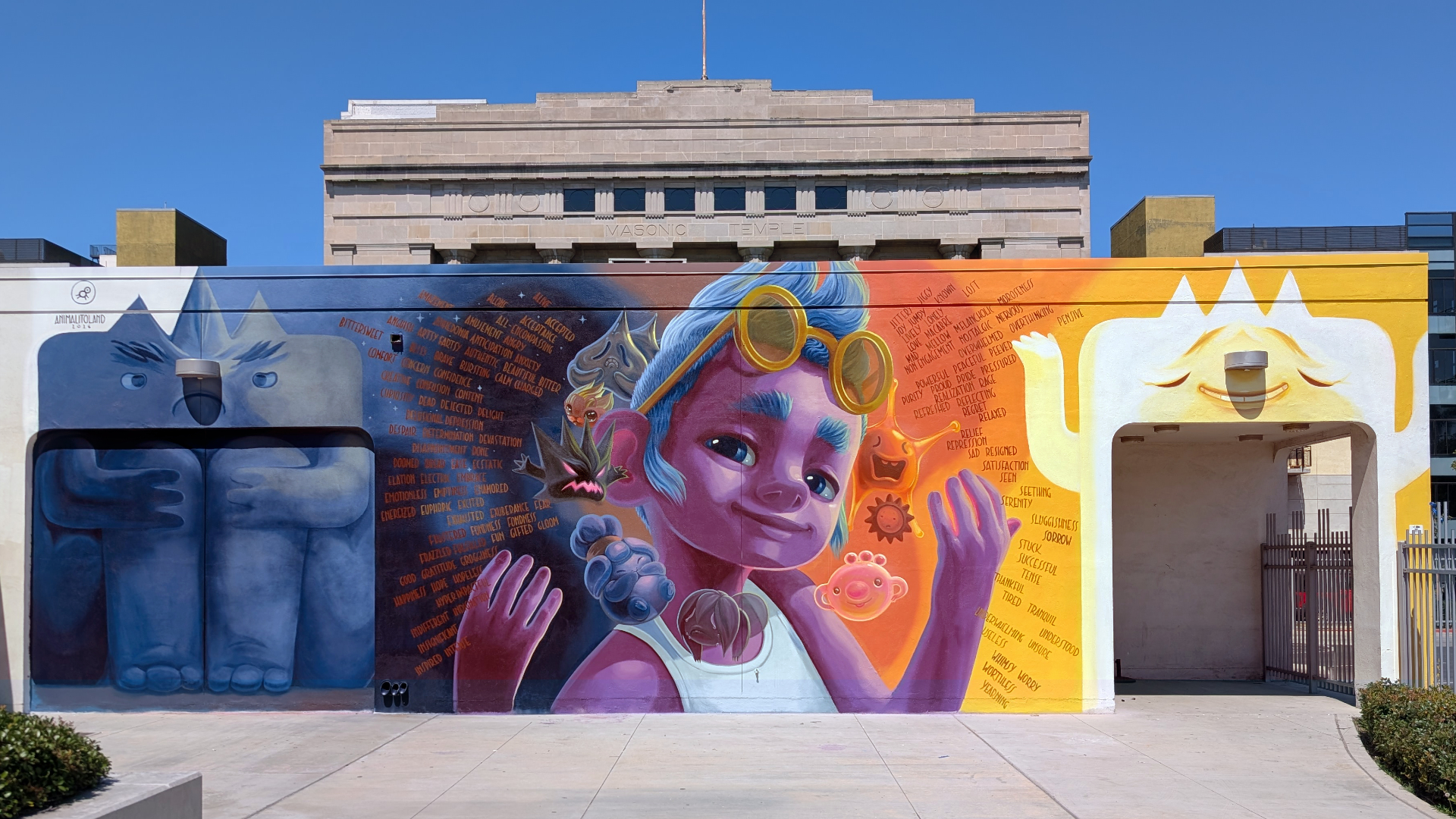
Every community has an invisible emotional landscape. A mural is a way to make some of it visible, but the painting itself is only one part of the process. The rest happens through conversations, finding words for what we feel, and the people willing to share them.
The Community
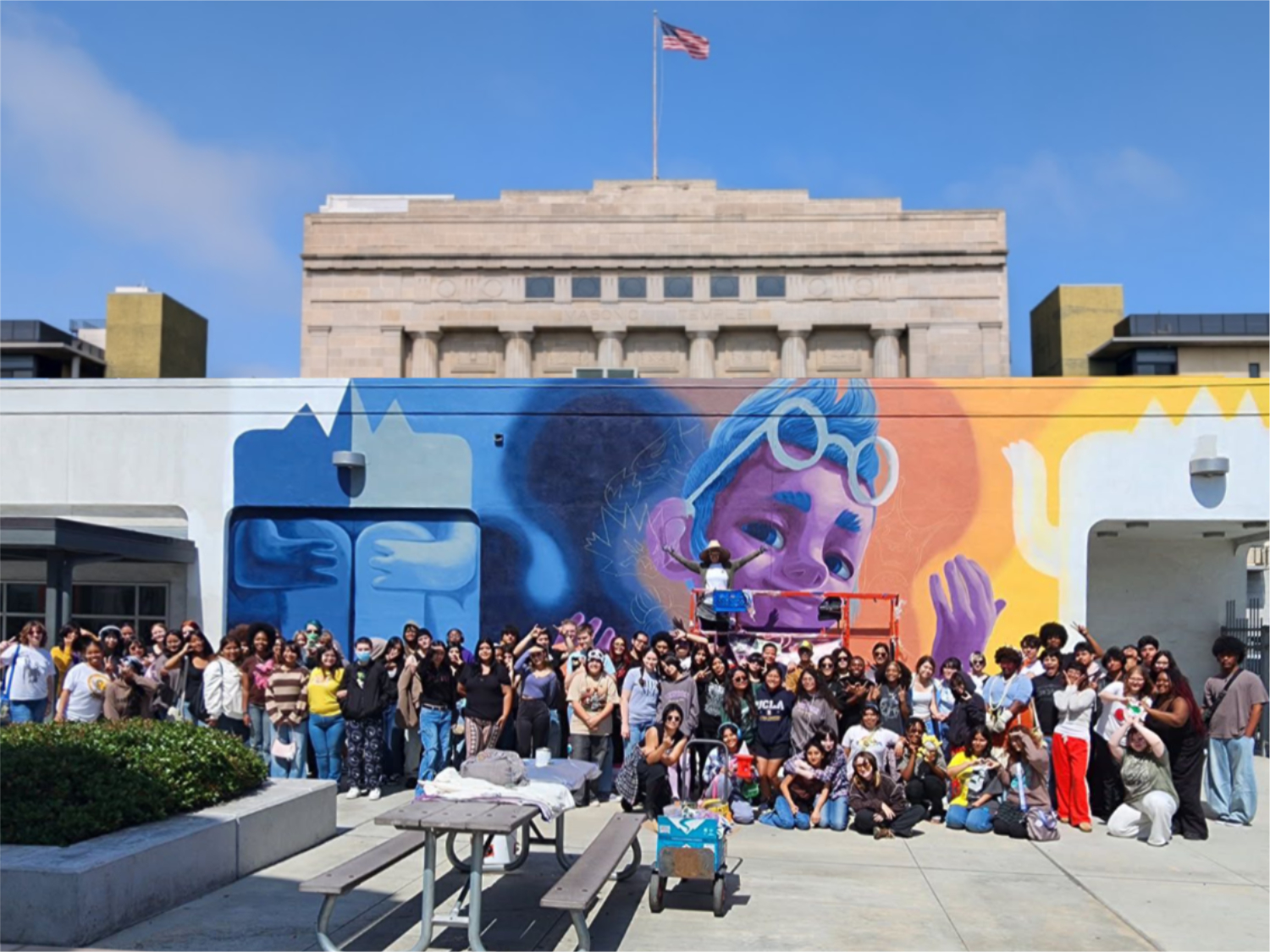
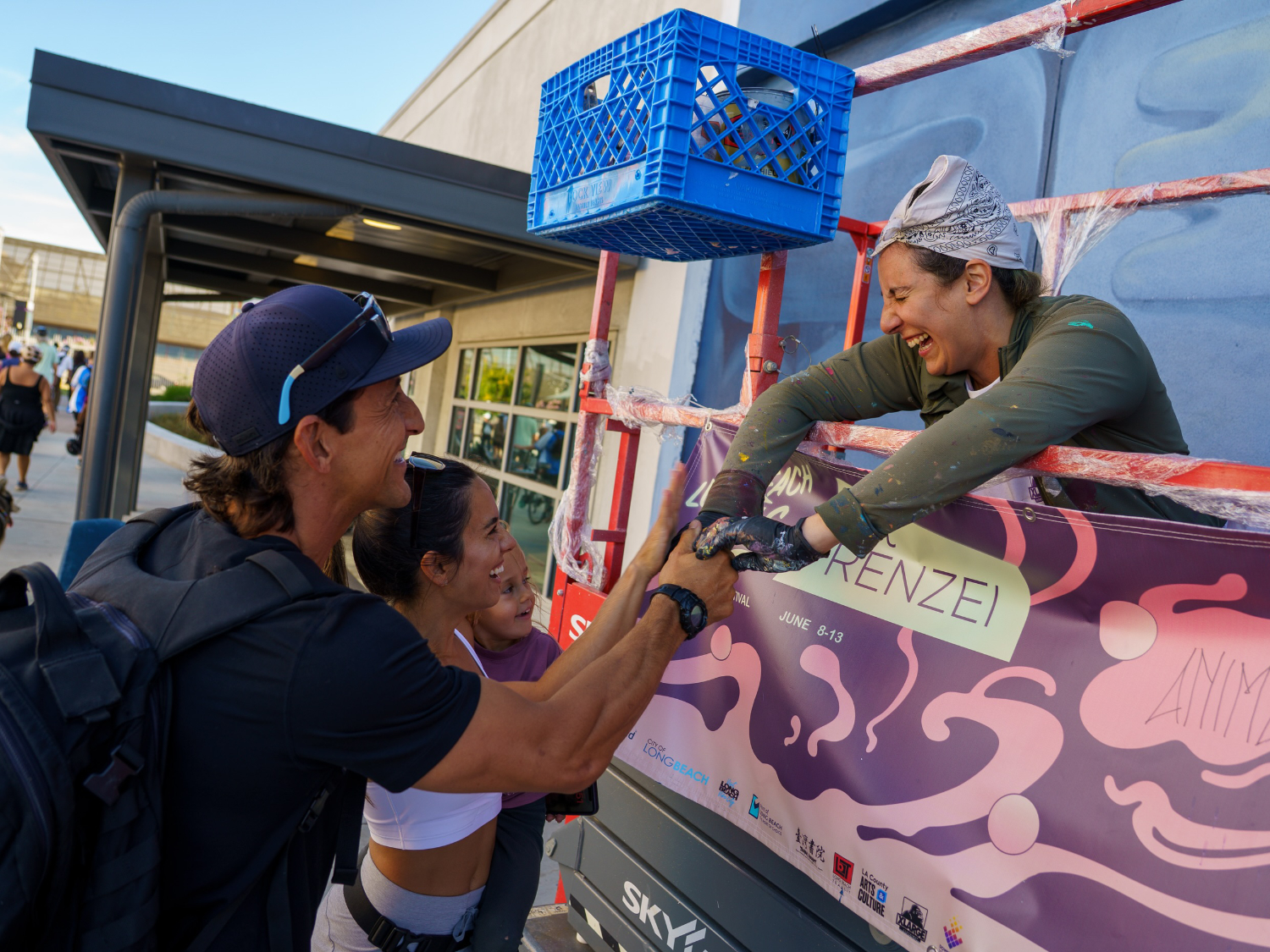
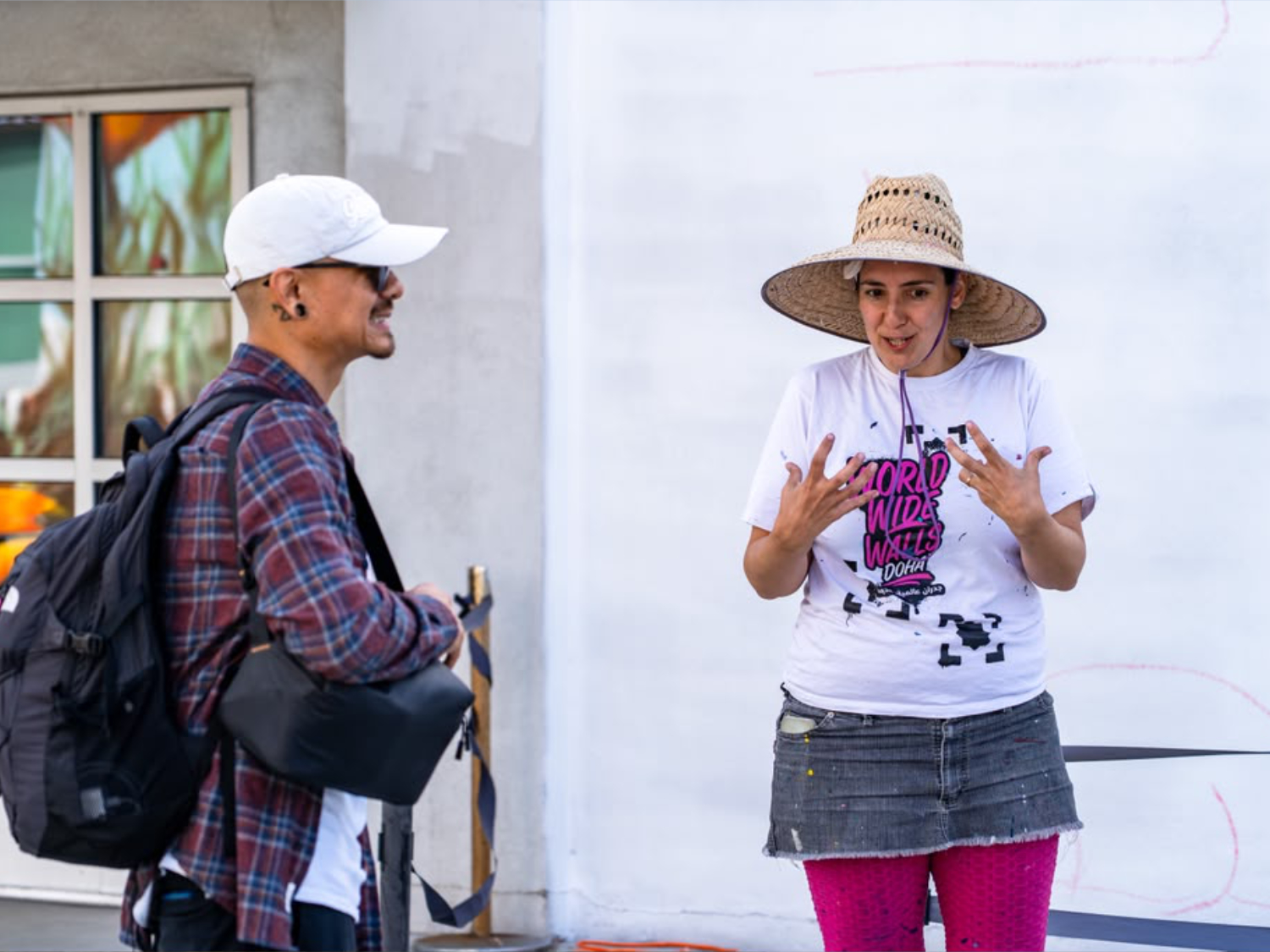
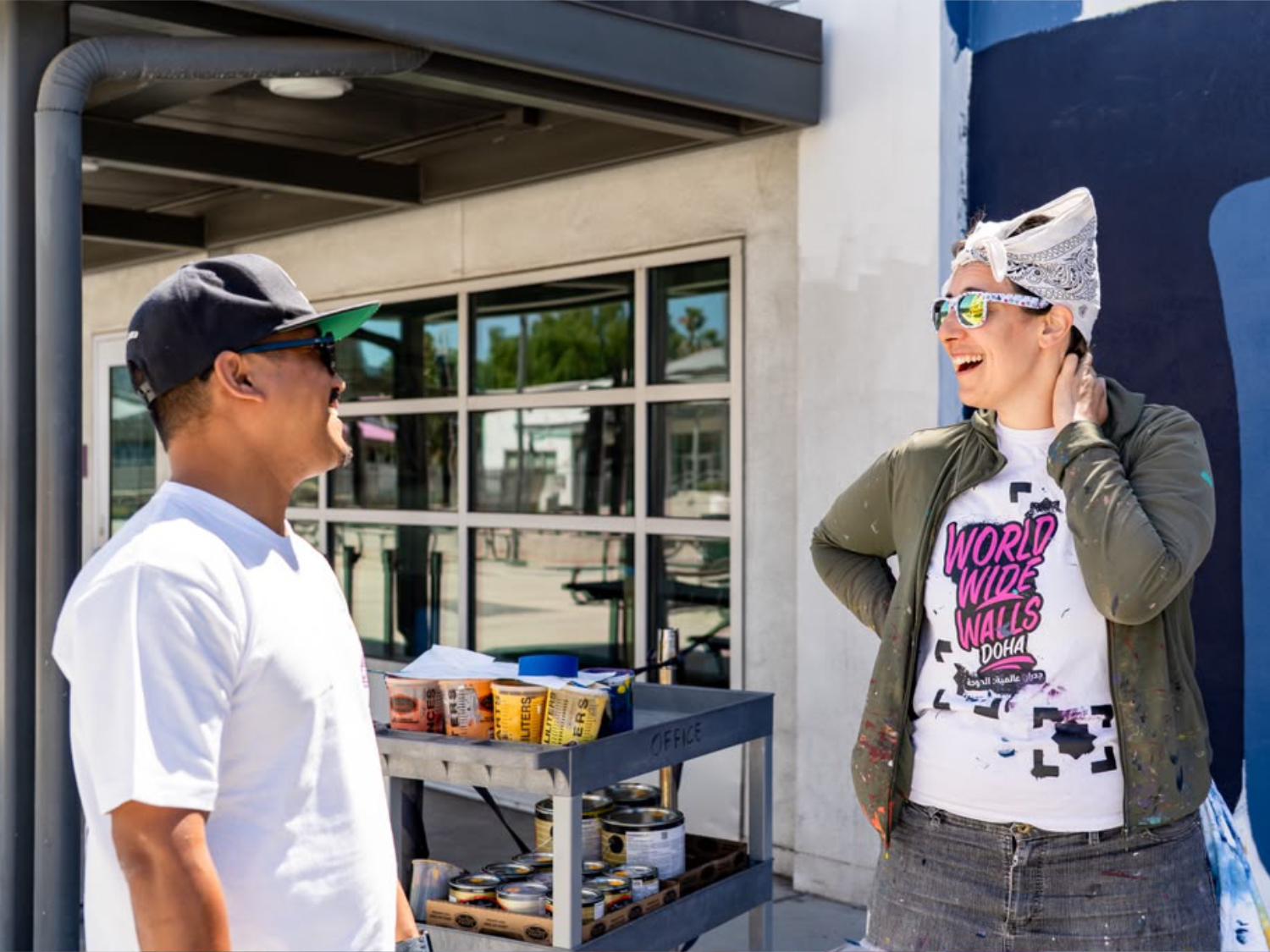
I painted at Renaissance High School for the Arts for the festival Long Beach Walls. The mural began as a painting, and quickly expanded into conversations with students, teachers, custodial staff, volunteers, neighbors, and passersby.
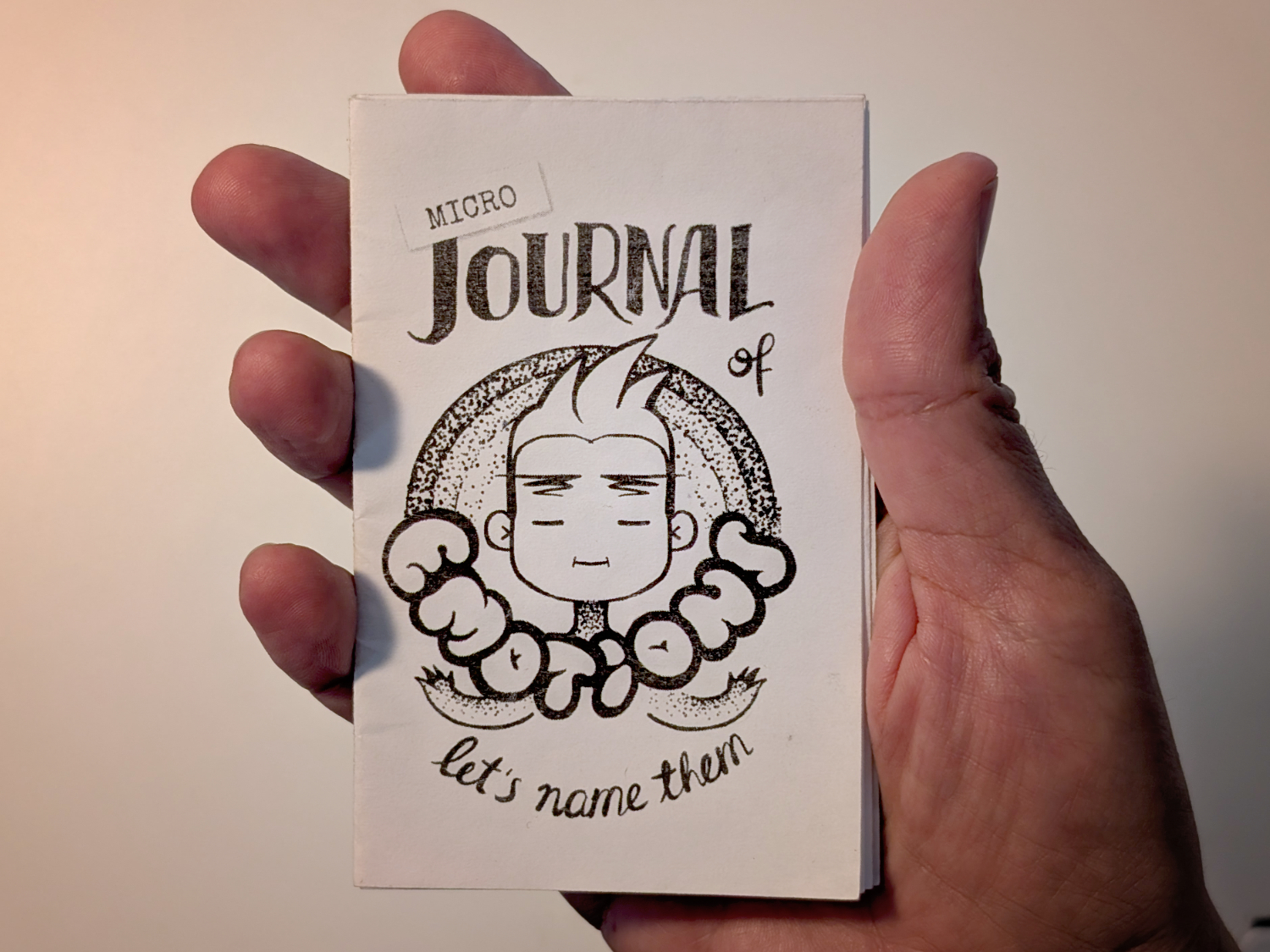
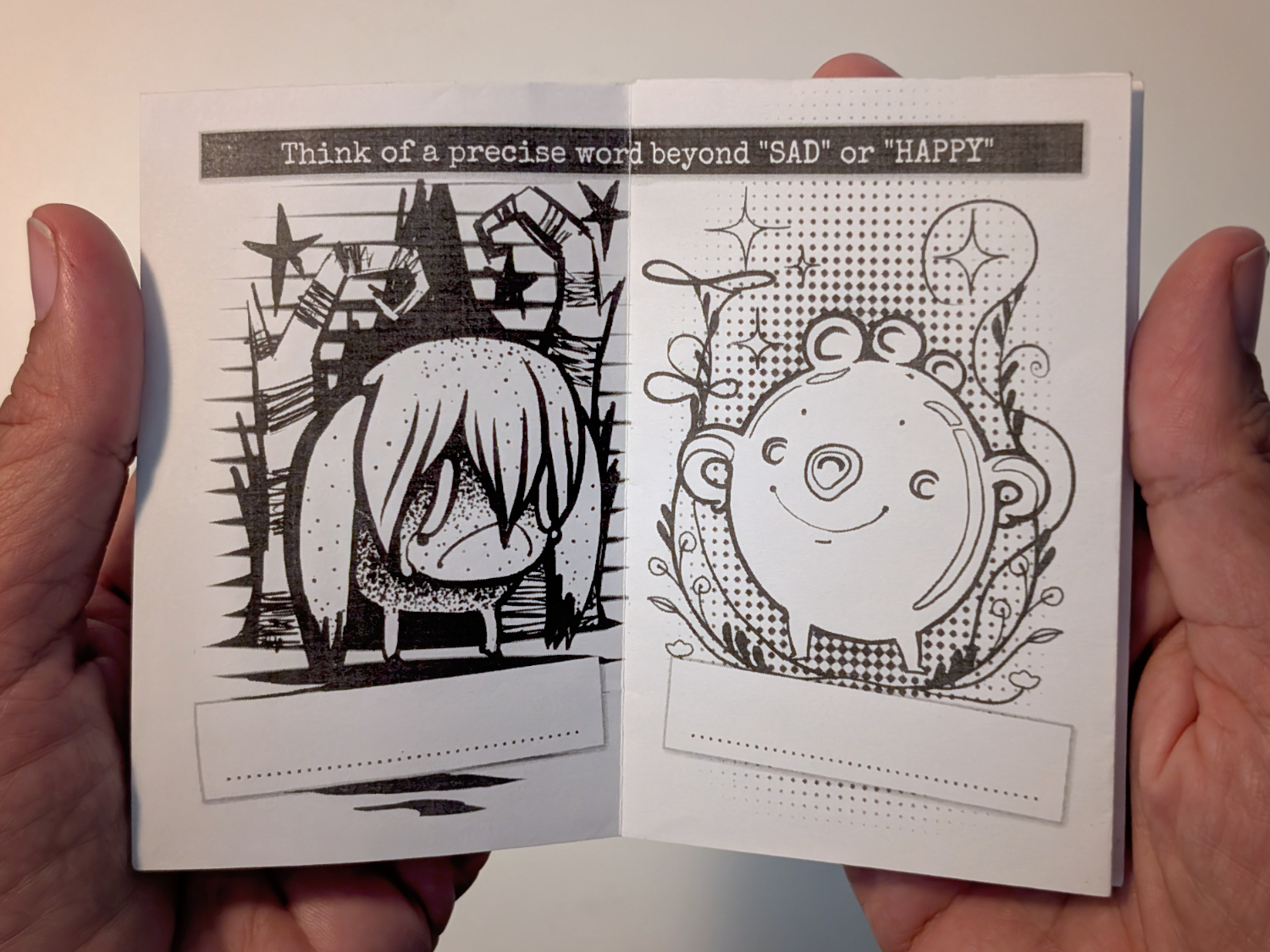
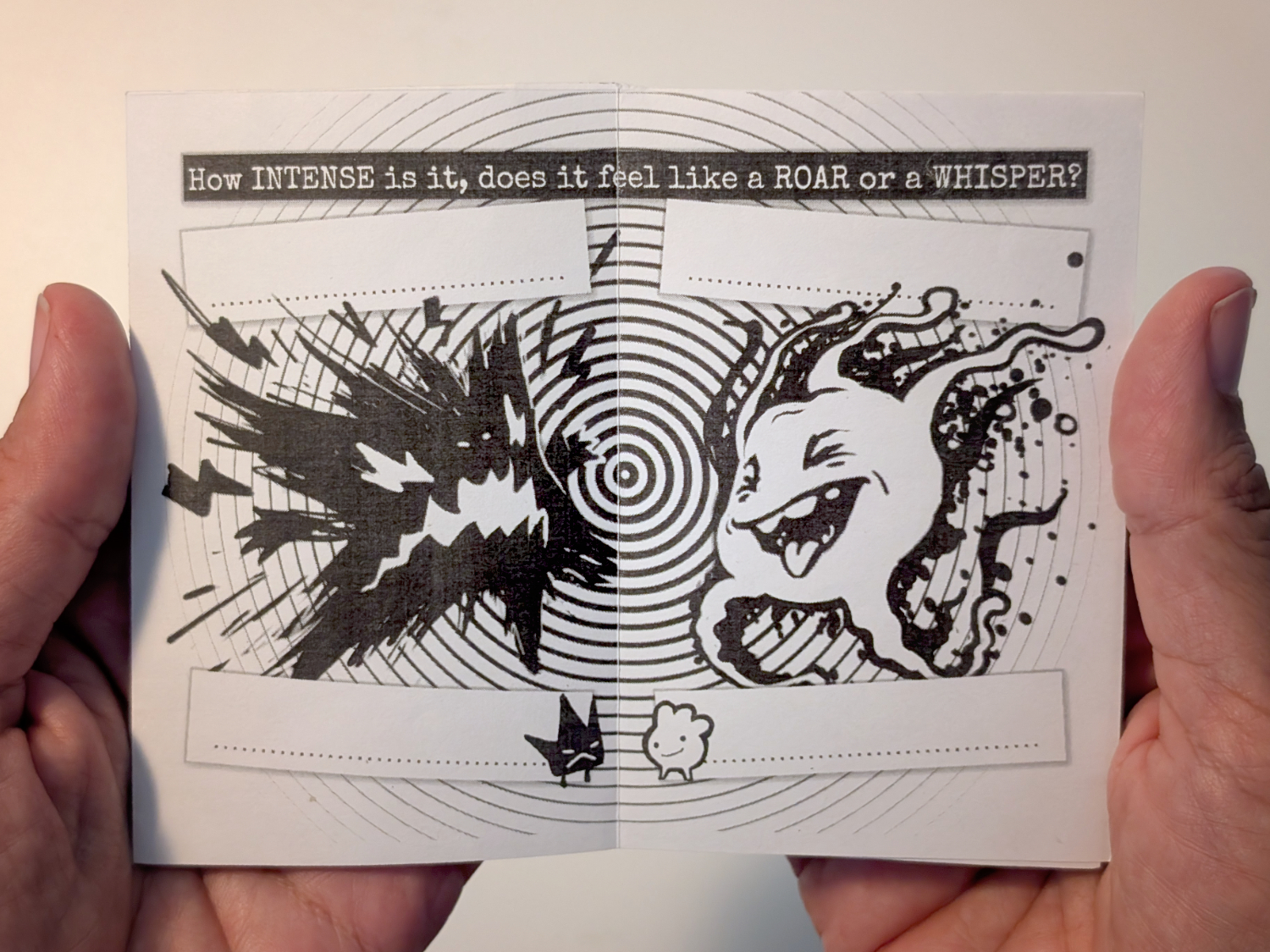
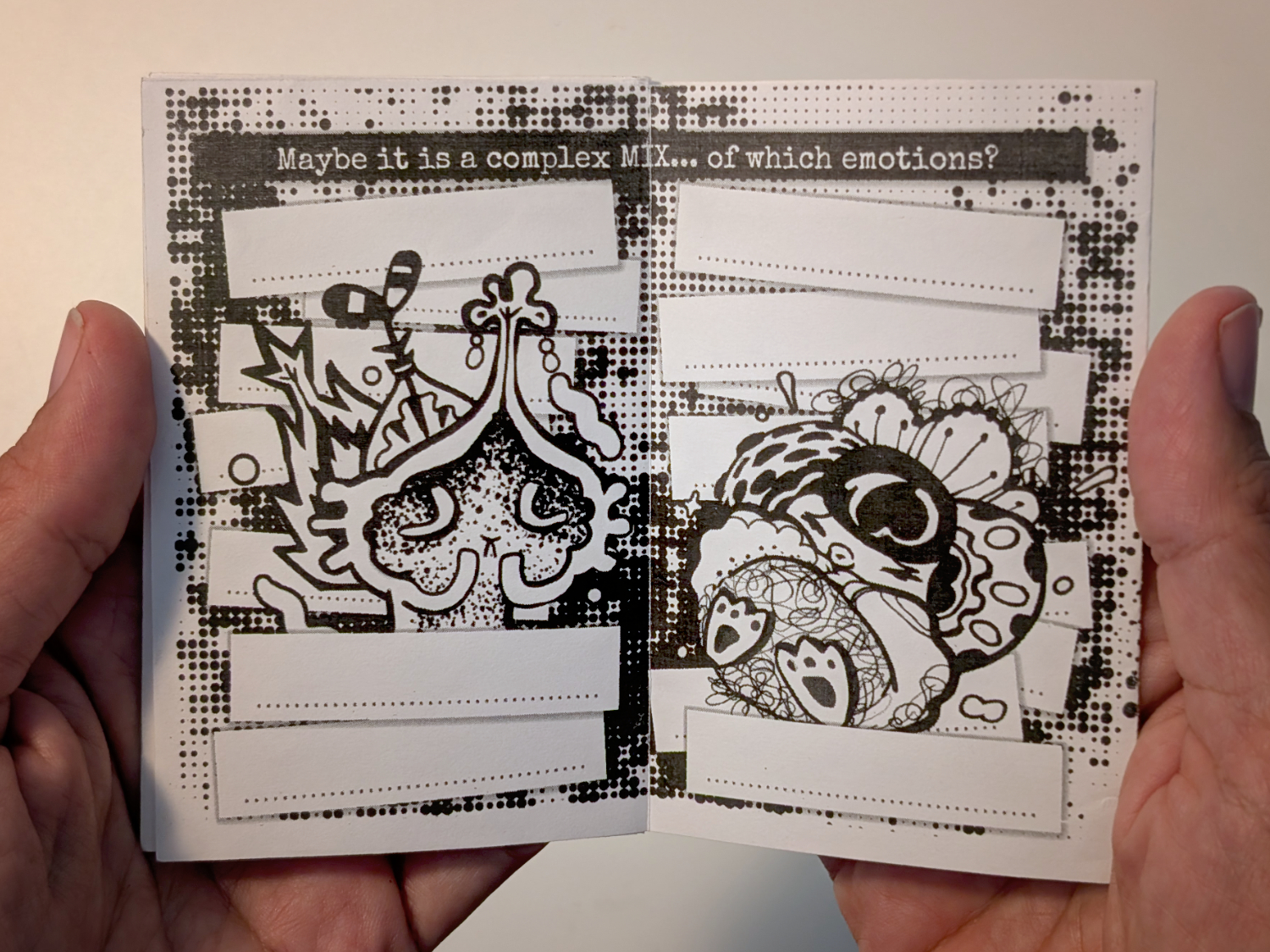
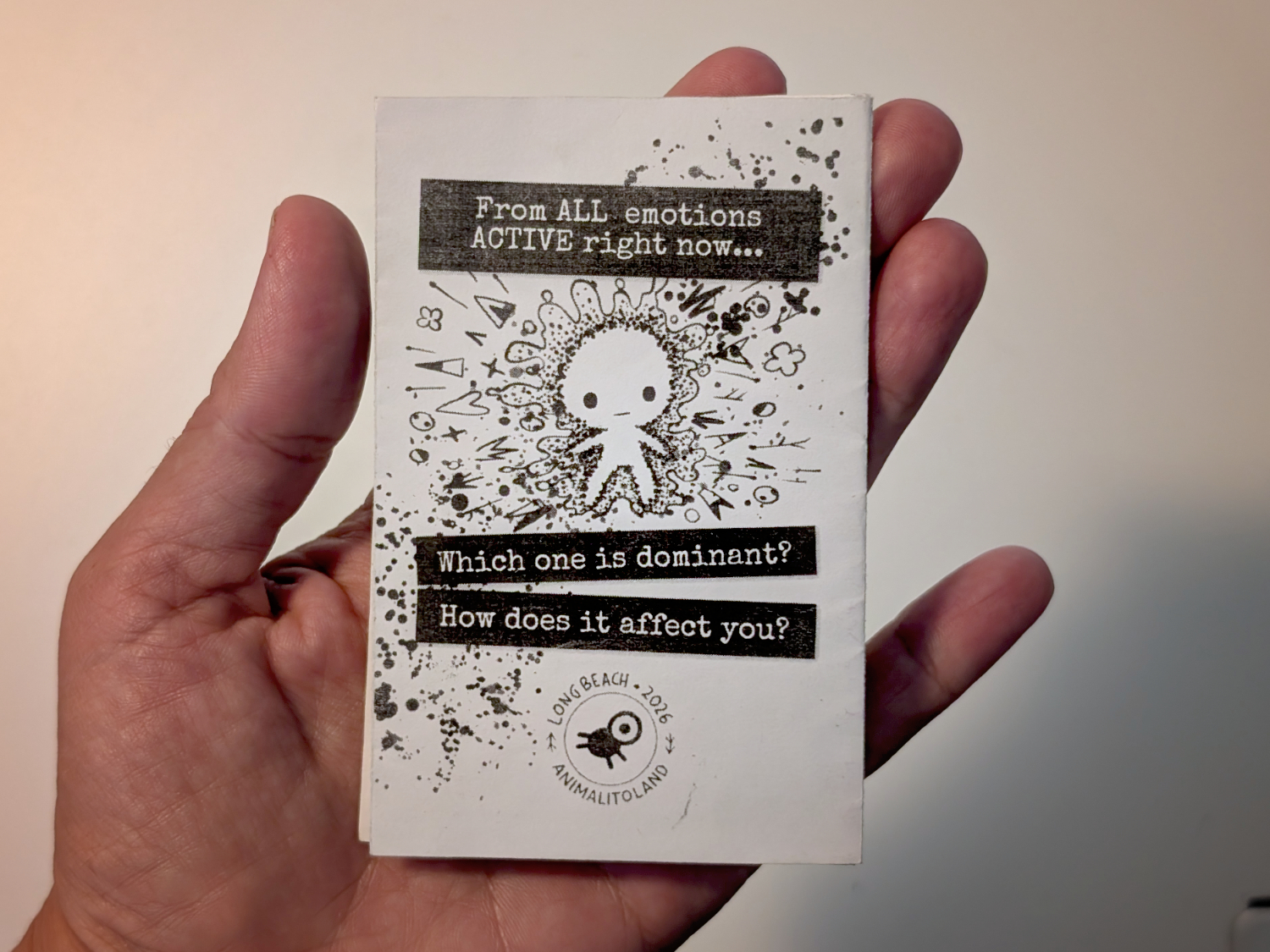
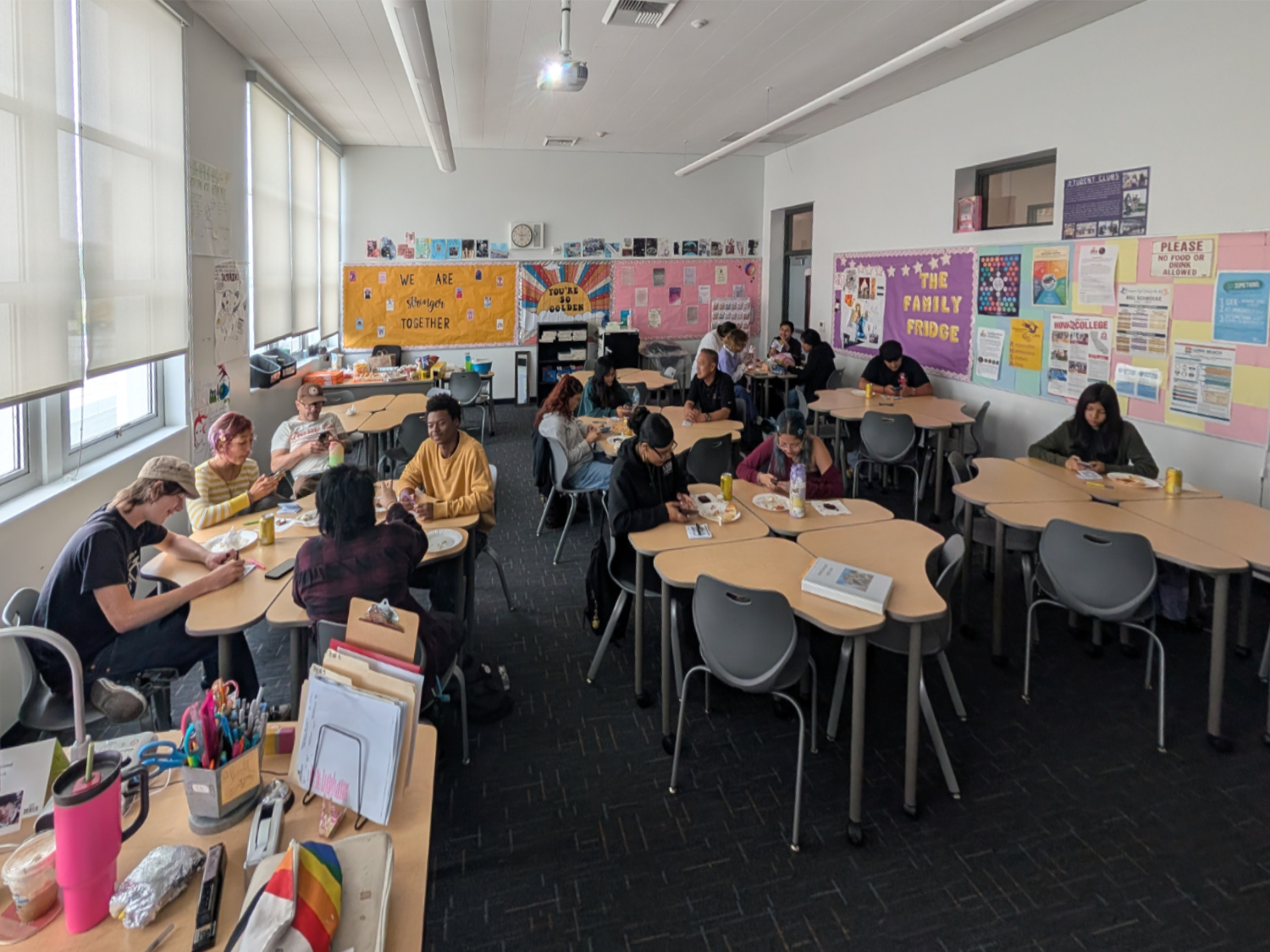
I visited some classrooms to introduce the project and hand out Micro-Journal of Emotions (fanzines). Due to limited time before the workshop, the fanzines arrived as flat, unassembled photocopies instead of finished booklets. What could have been a limitation became an unexpected advantage. Folding and cutting the pages together created a shared tactile moment that helped ground the conversation before we even began talking about emotions. One student explained the folding sequence using the local metaphors “hot-dog,” “hamburger,” and “burrito.” Those references immediately clicked with everyone else in the room and reminded me how much richer a process becomes when each community can bring its own language and references into it.
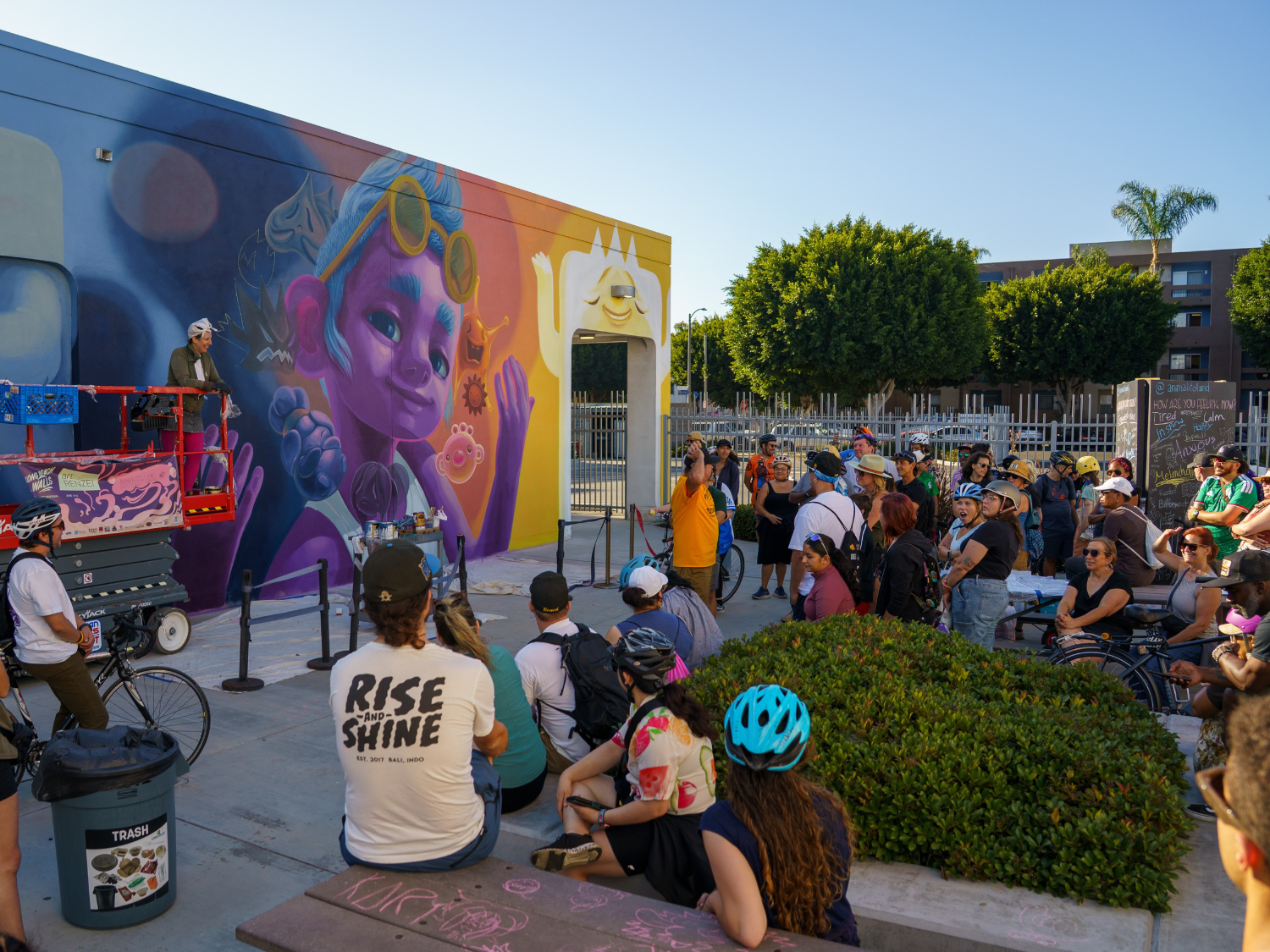
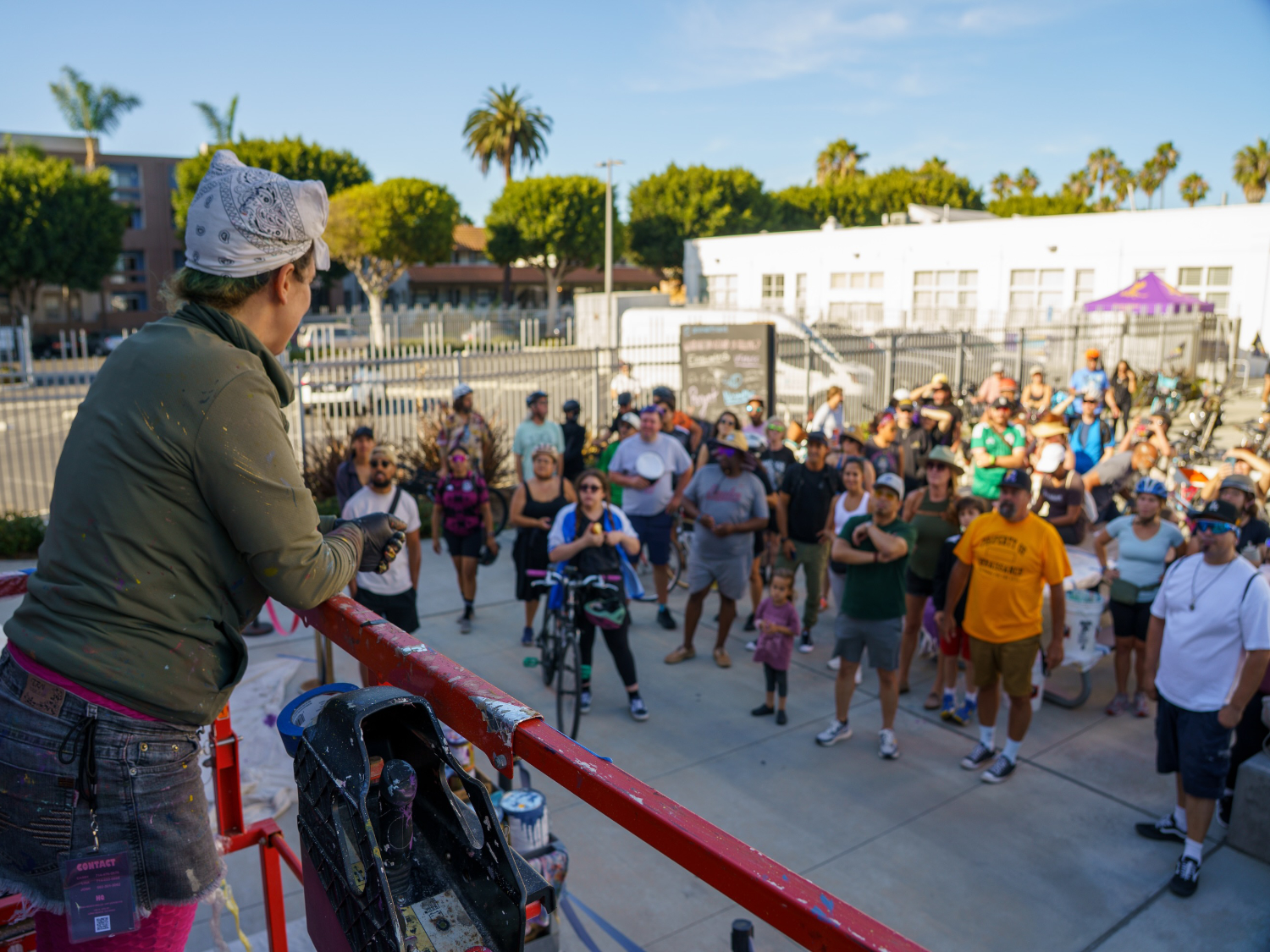
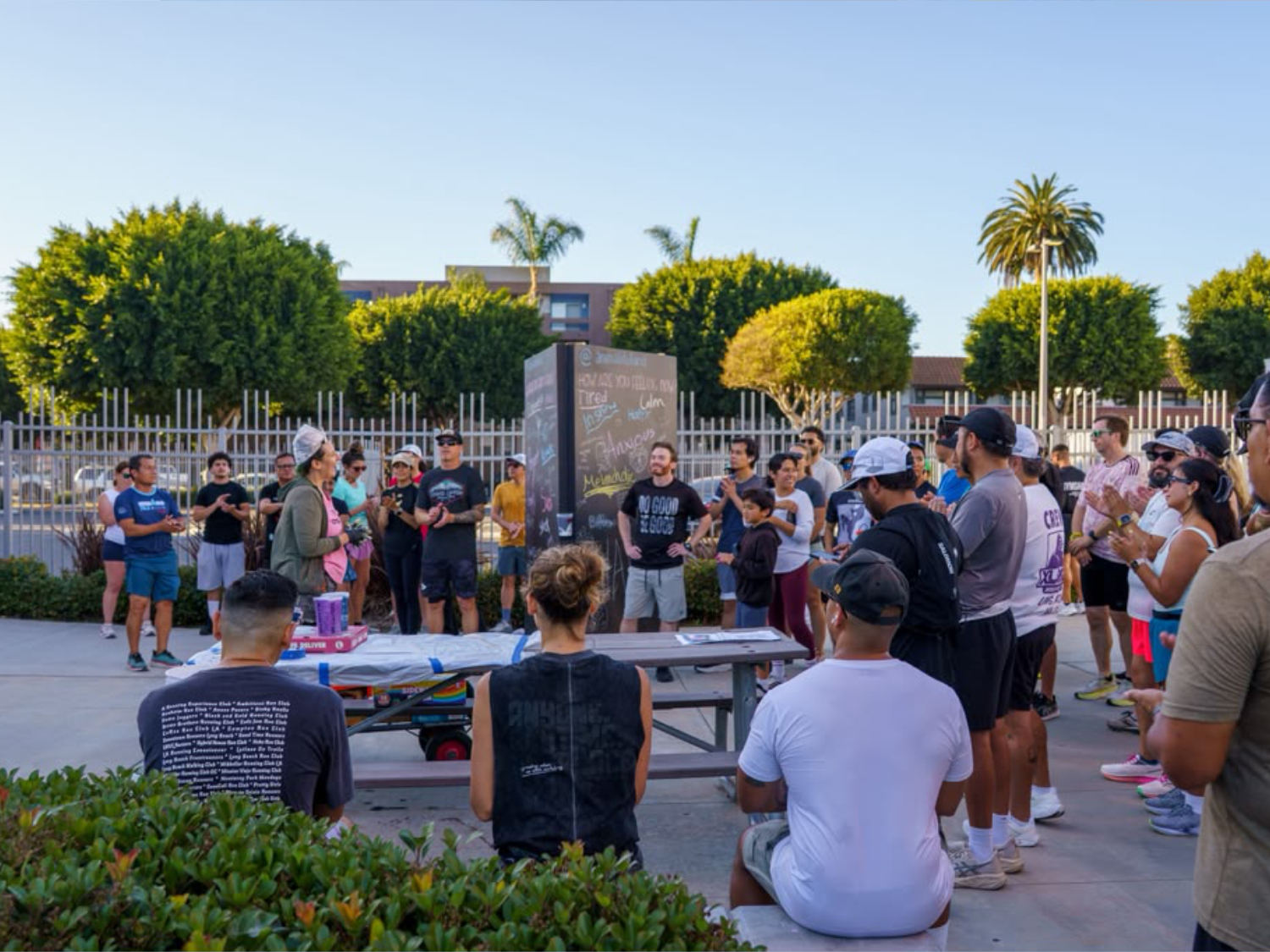
Once school hours ended, the building closed, and something as simple as accessing storage or a restroom became an opportunity to meet the school’s custodial and cleaning staff. Daily conversations gradually turned into genuine curiosity about the project, and many of them ended up contributing words to the collection themselves. Over the weekend, the quiet schoolyard transformed into an informal gathering place where neighbors, volunteers, festival organizers, and passersby stopped to share thoughts, emotions, and conversations around the mural.
The Words
We often reduce how we feel to broad categories like “good” or “bad.” This project was an invitation to slow down and look for more precise words, building a richer emotional vocabulary together, right on the street.
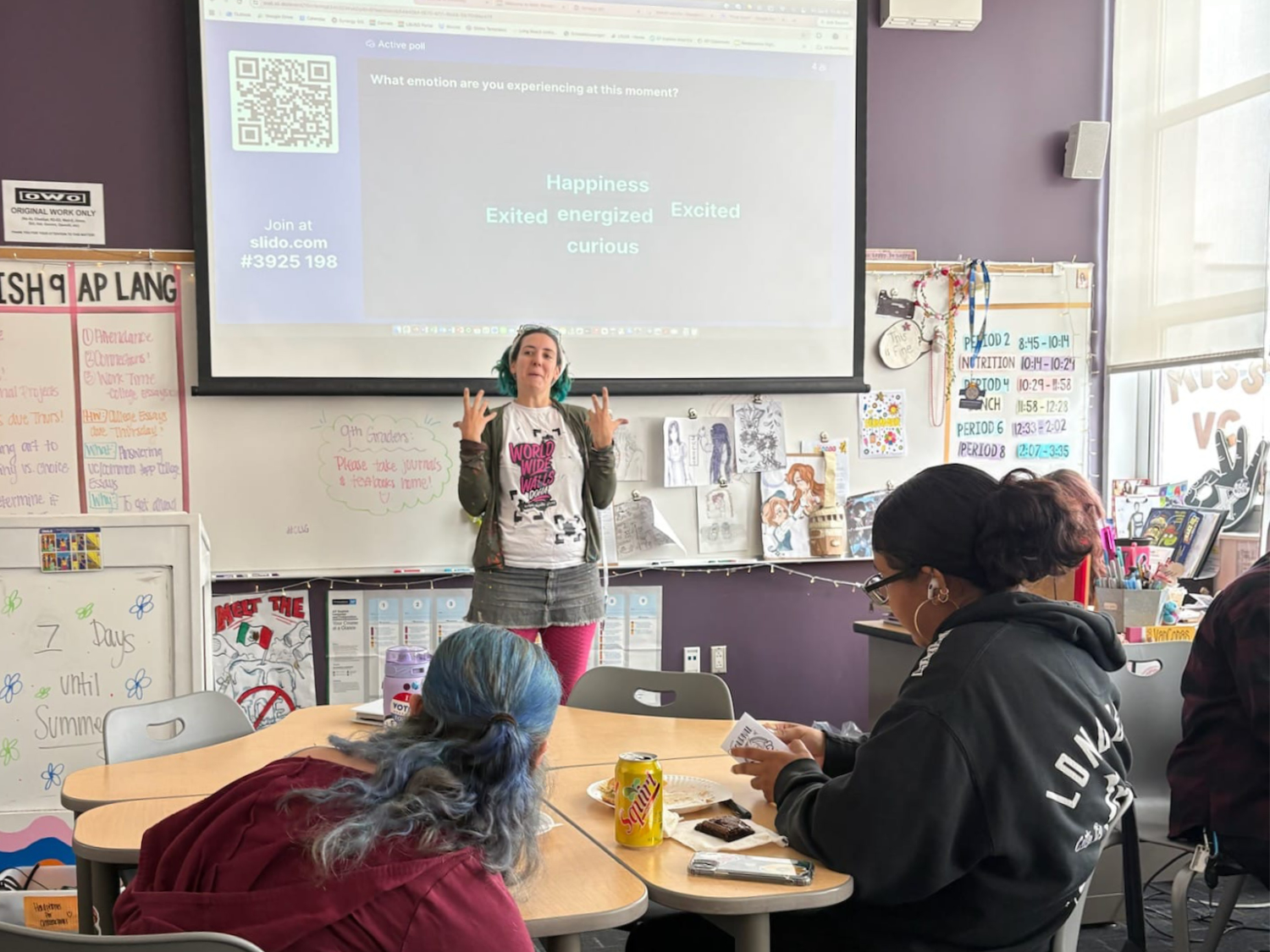
To gather these voices, I used different channels, each capturing a different kind of expression.In the classrooms, I tested a real-time digital poll where students texted words from their phones to a collective cloud projected on a screen. Because it required very little reflection, it worked well as an icebreaker, but I chose not to include those words in the final mural.
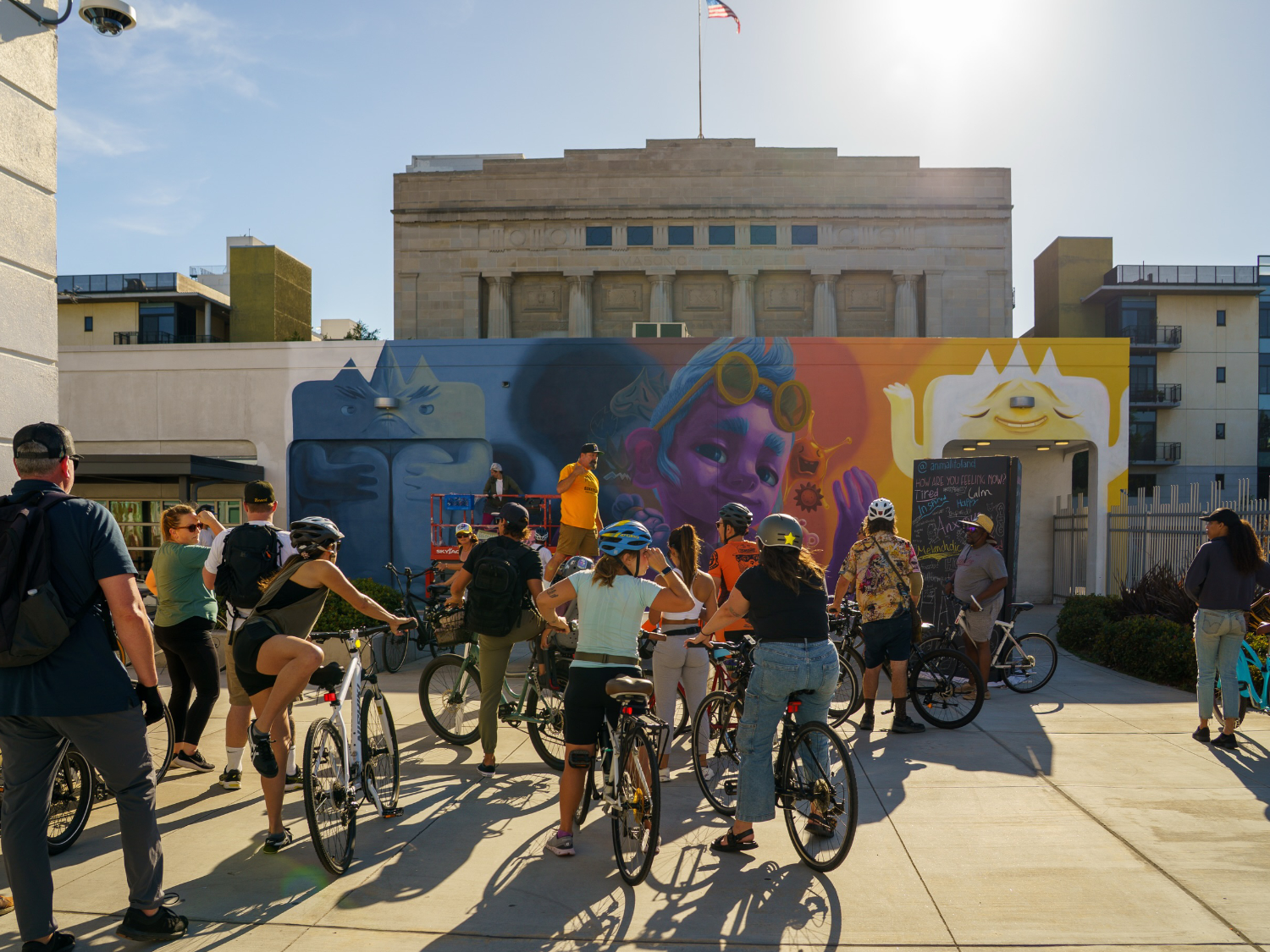
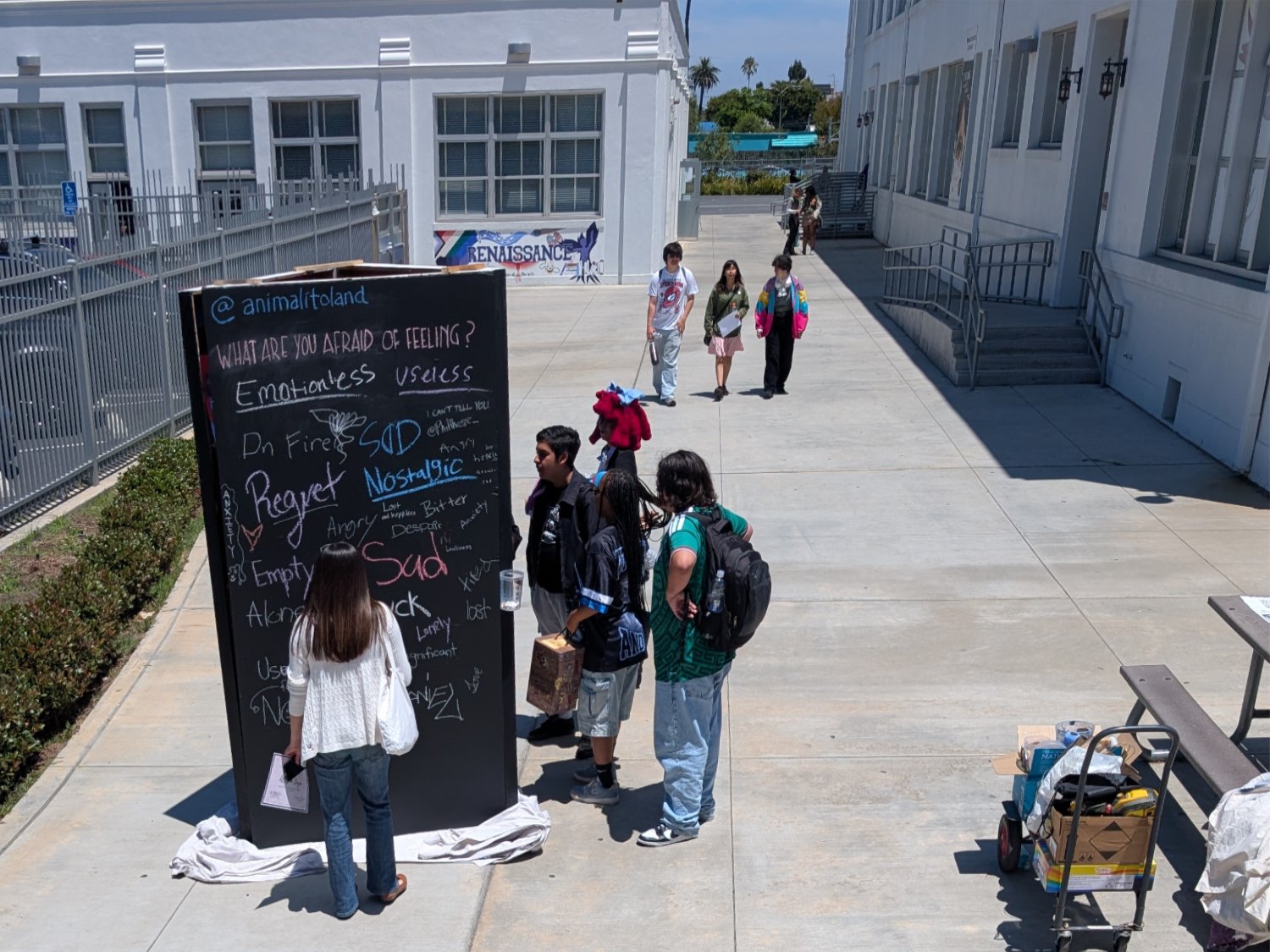
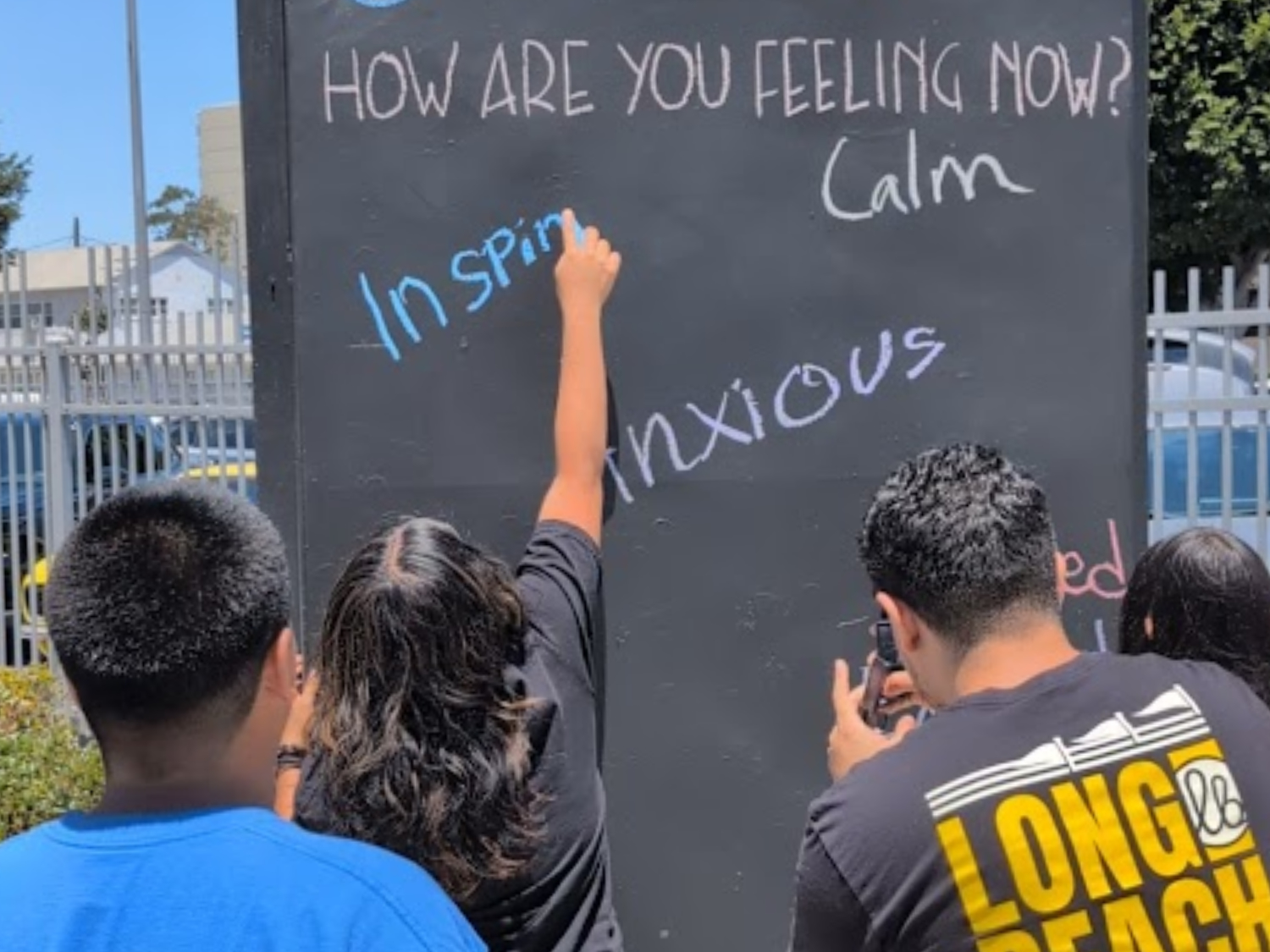
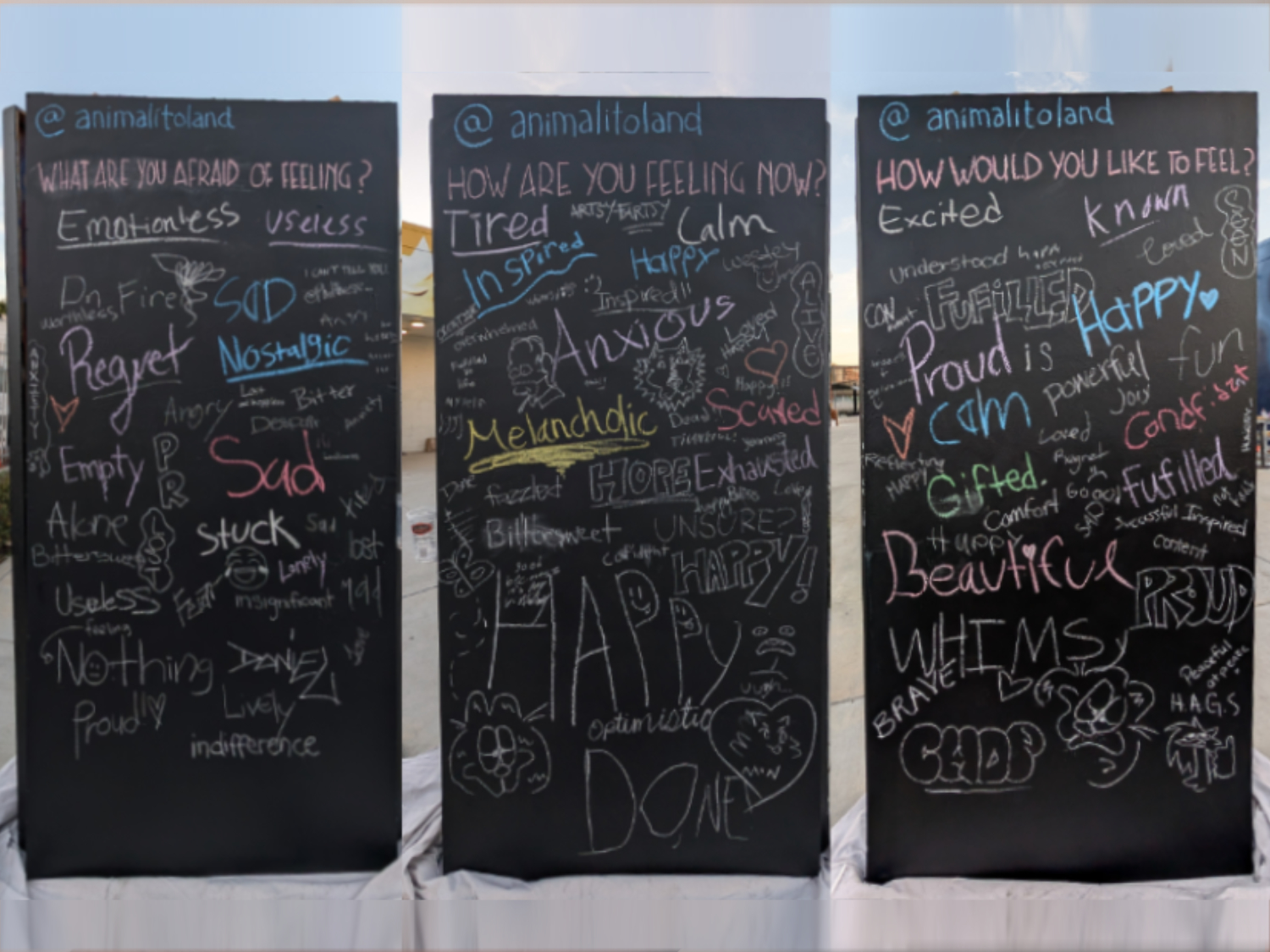
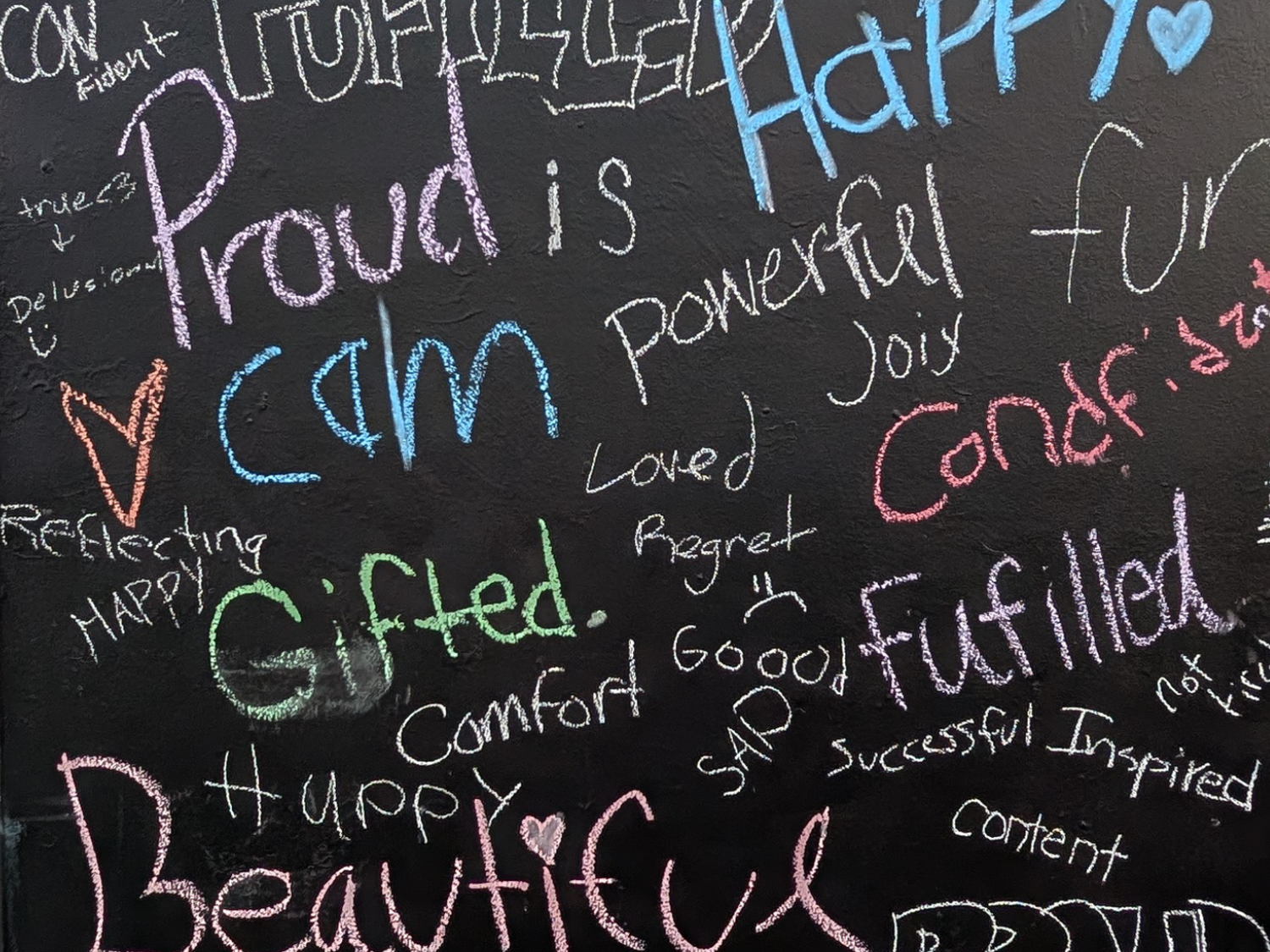
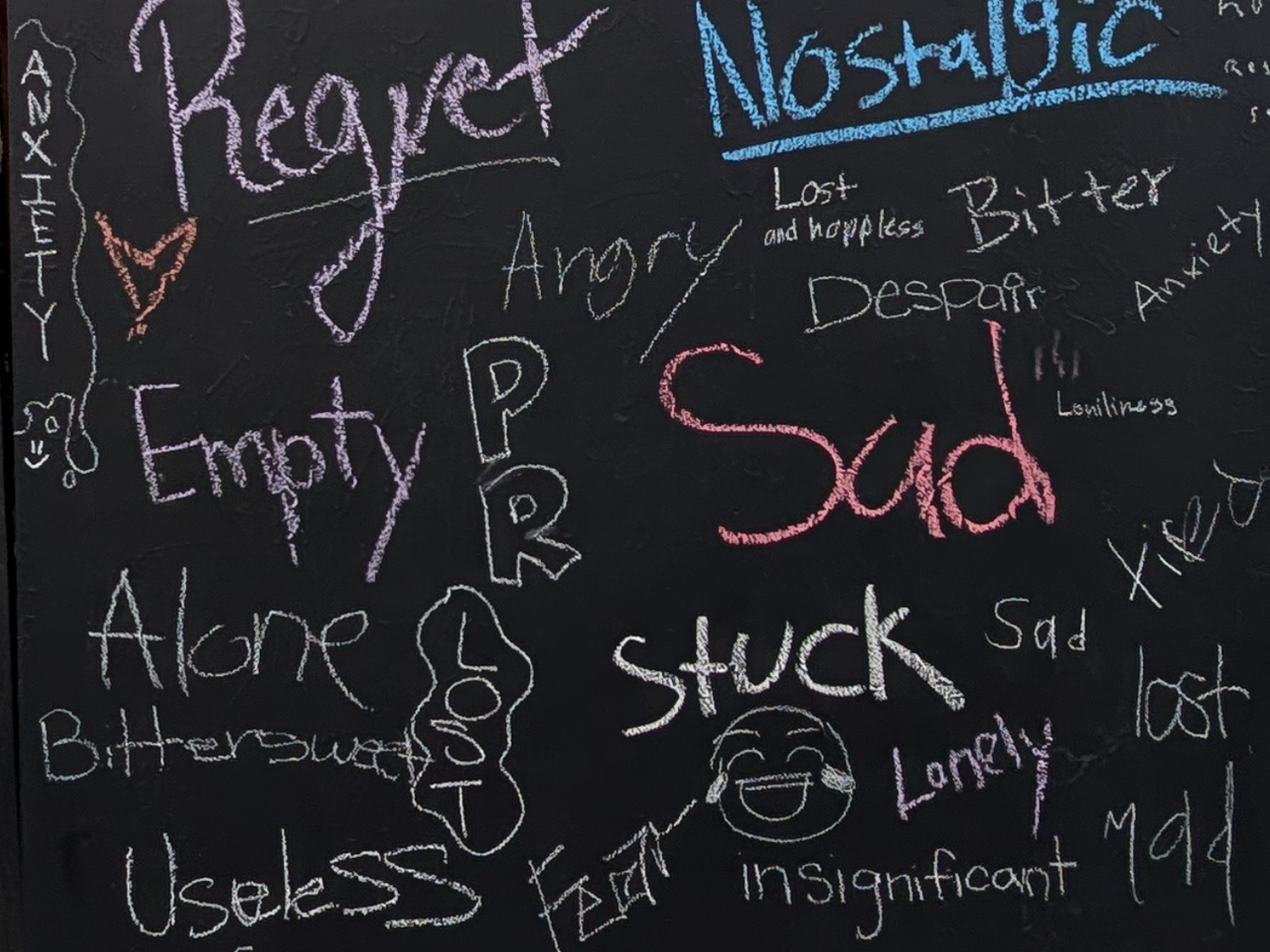
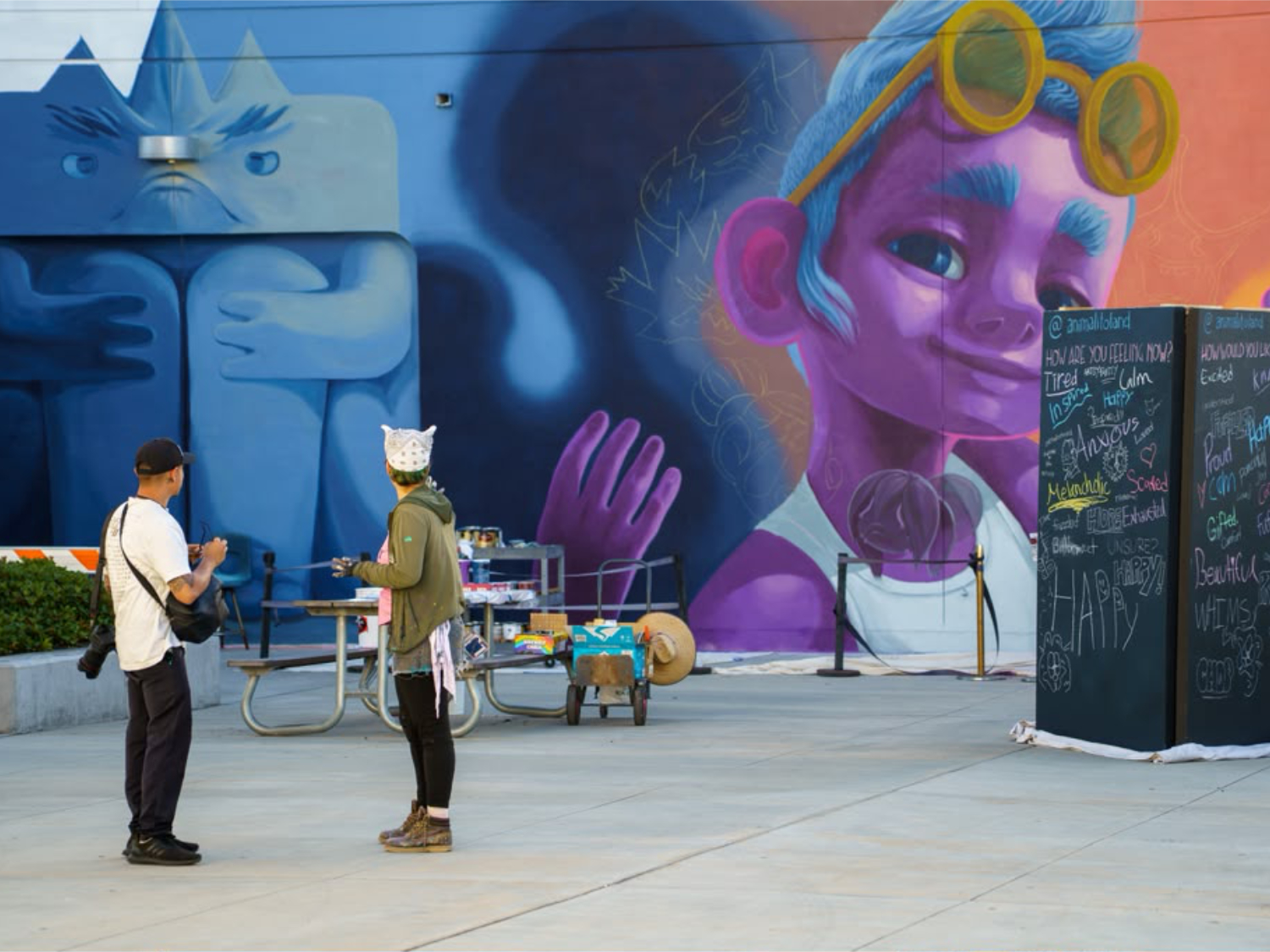
Instead, the final artwork focused on the friction between two primary inputs: the private Micro-Journals (which had a digital version to facilitate my access to the words) and the public chalkboards. The school’s dean proposed installing a three-part chalkboard beside the mural, suggesting three prompts to guide the public: first, asking what people were feeling right now; next, what they would like to feel; and finally, what they were afraid of feeling.
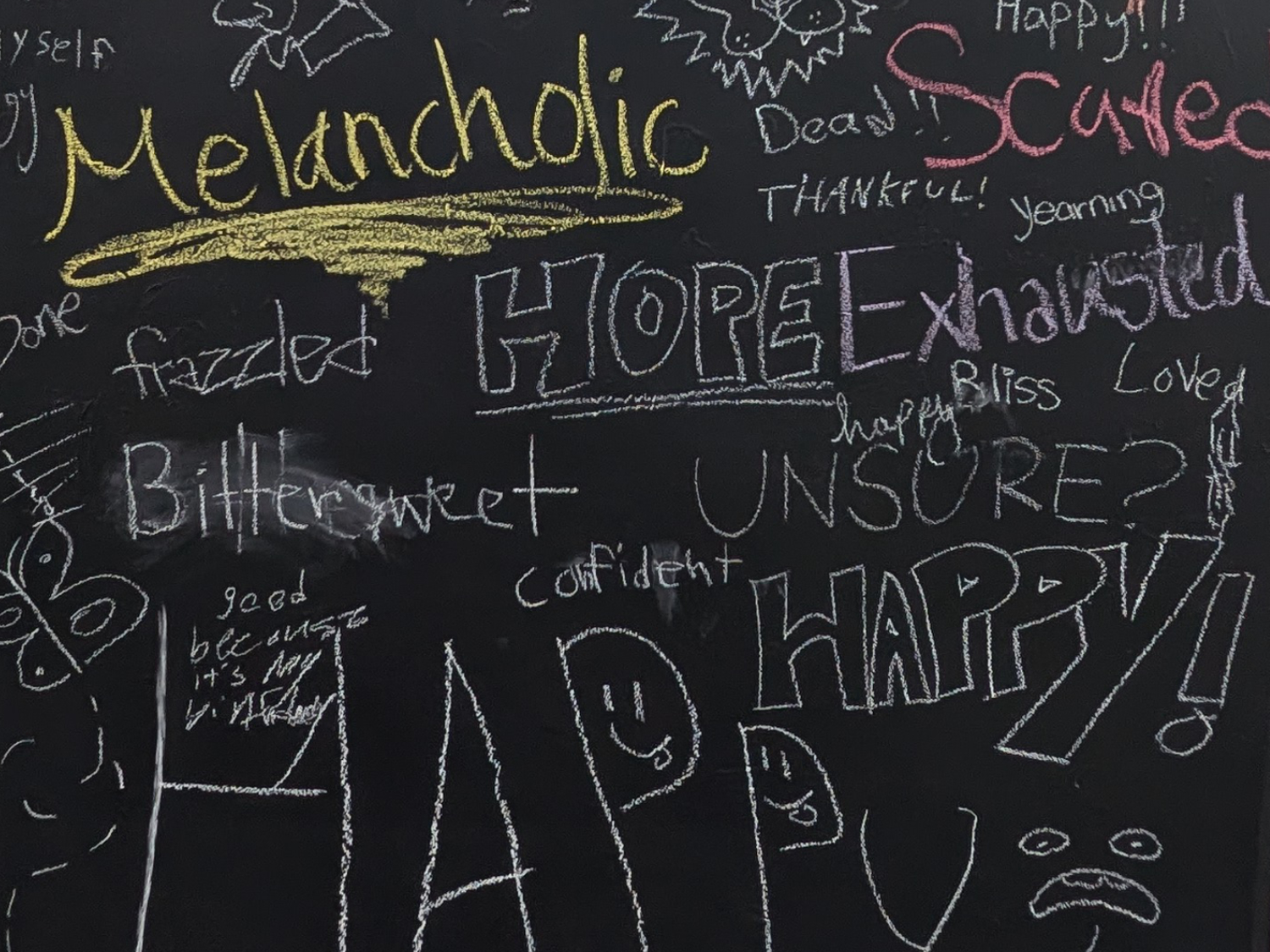
Comparing both formats revealed an interesting relationship between privacy and expression. Anonymous digital entries yielded highly specific, precise emotional vocabulary. On the other hand, the chalkboards became a space for immediate, raw intensity, where handwritten marks wandered in every direction, capturing a chaotic release of hopes and fears. Transcribing it was slow work. A public chalkboard naturally collects everything, including unrelated tags. While filtering those out was necessary, some non-traditional words like artsy-fartsy stayed in the archive. The school’s dean told me it was local student humor about the pressure of going to an arts school. Including it simply felt true to the place.
The Mural
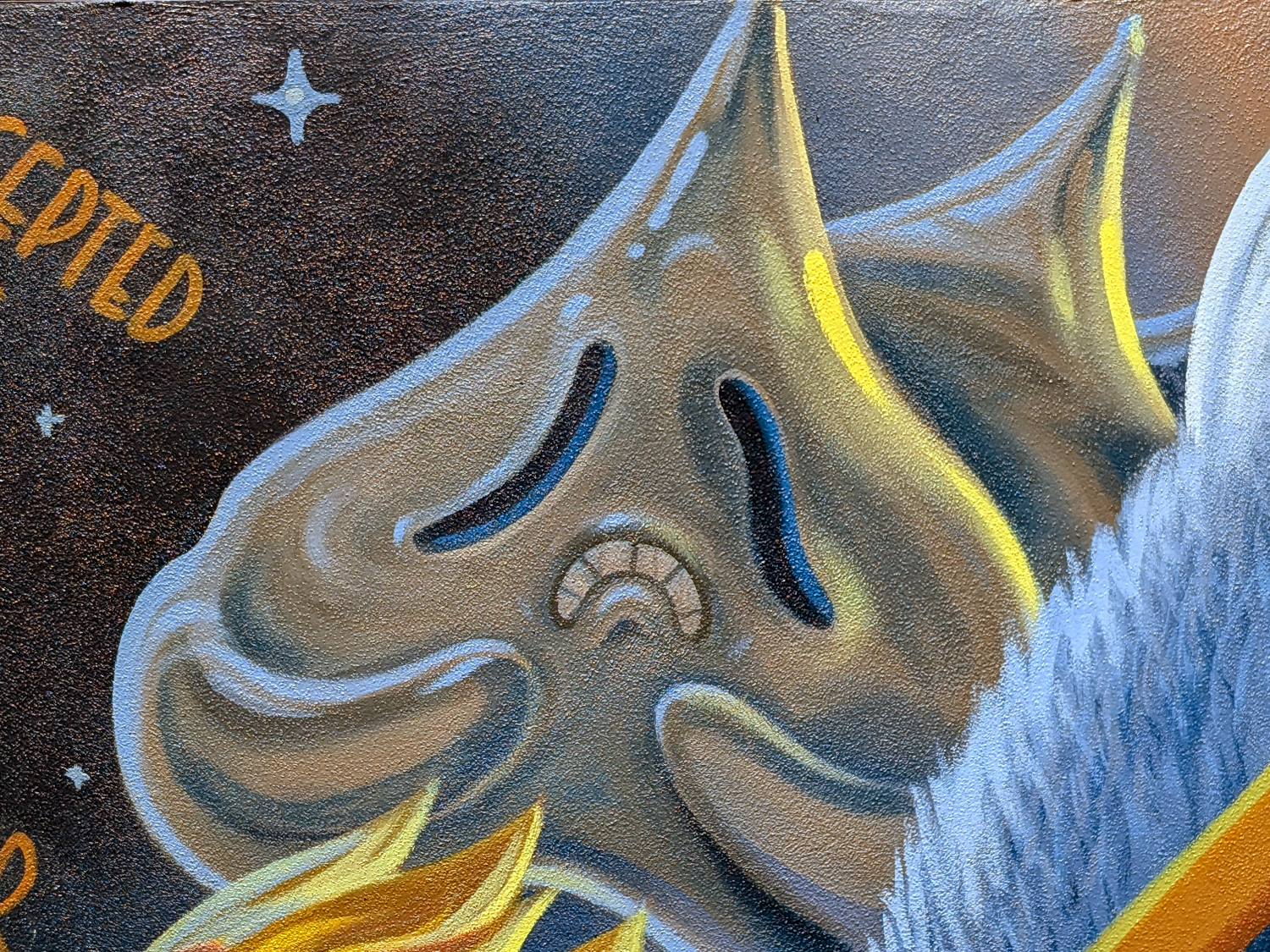
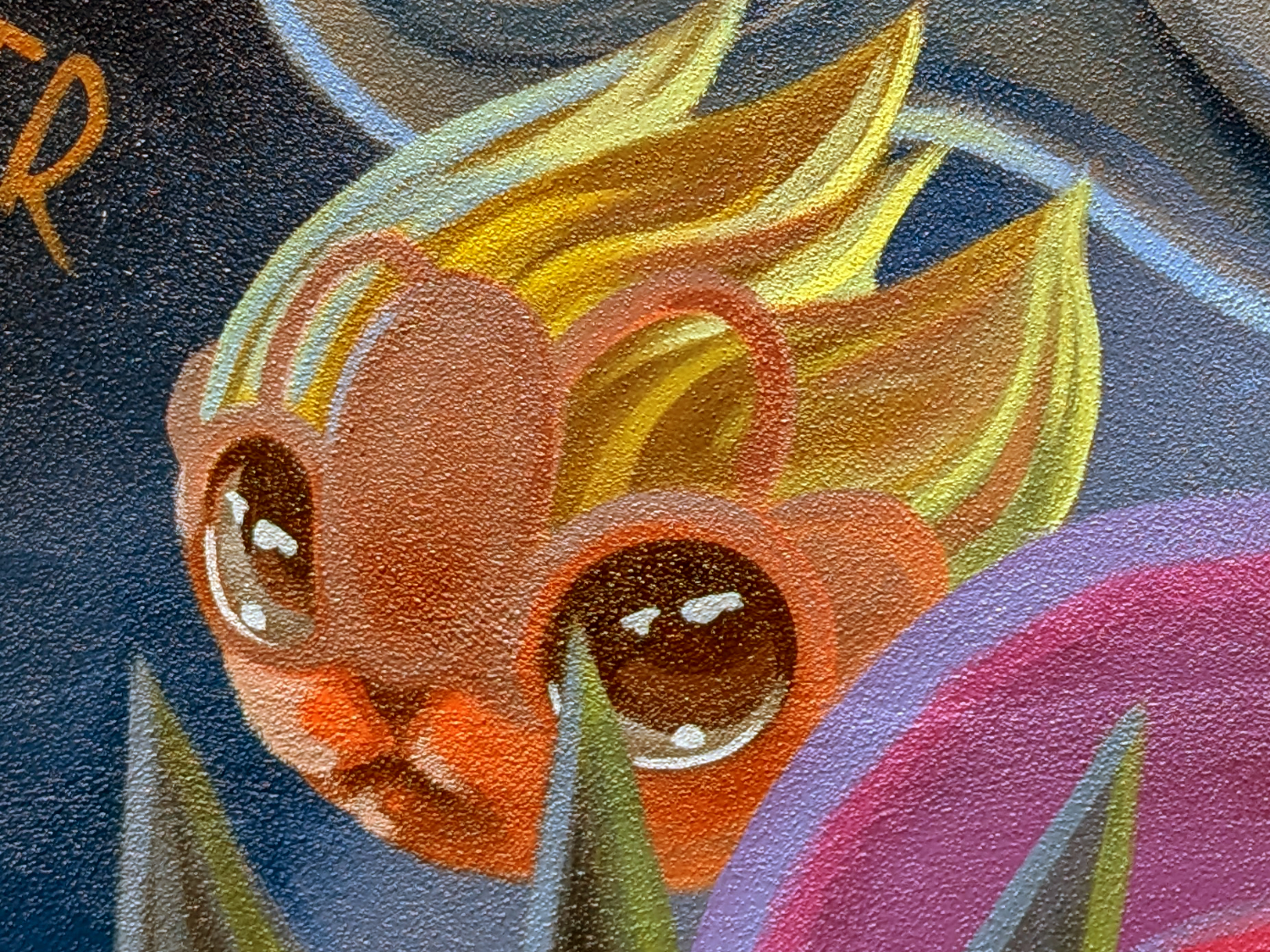
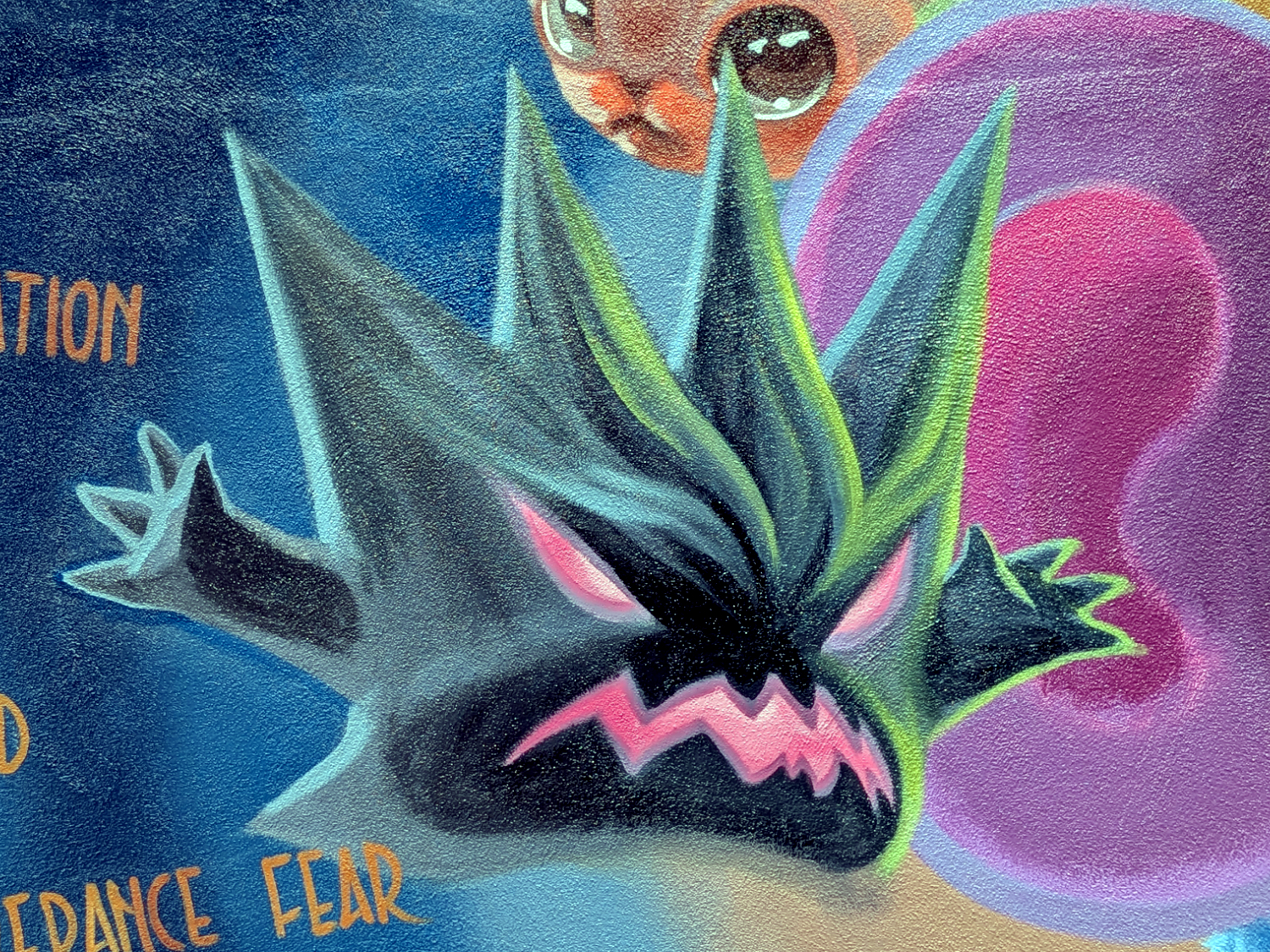
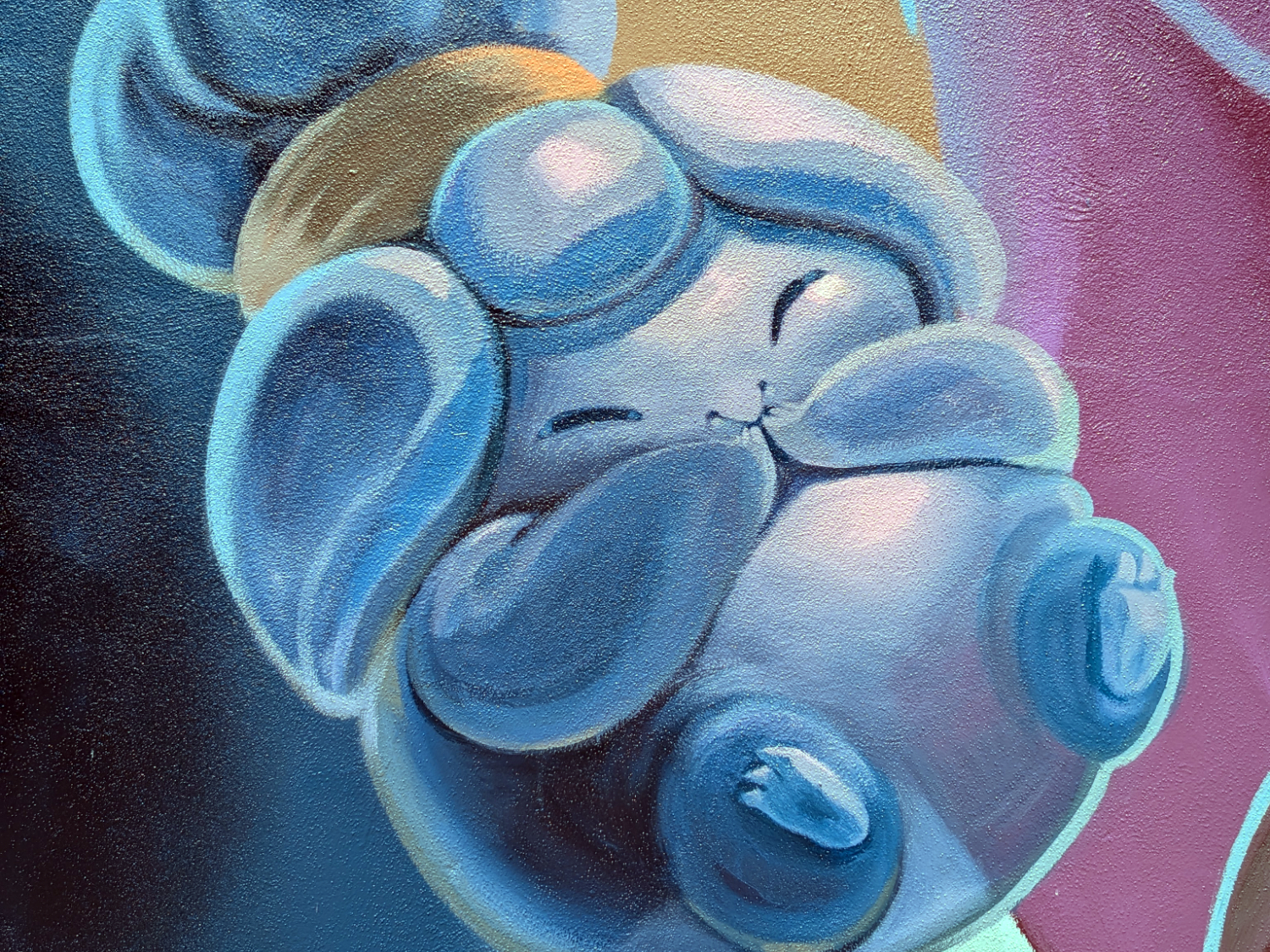
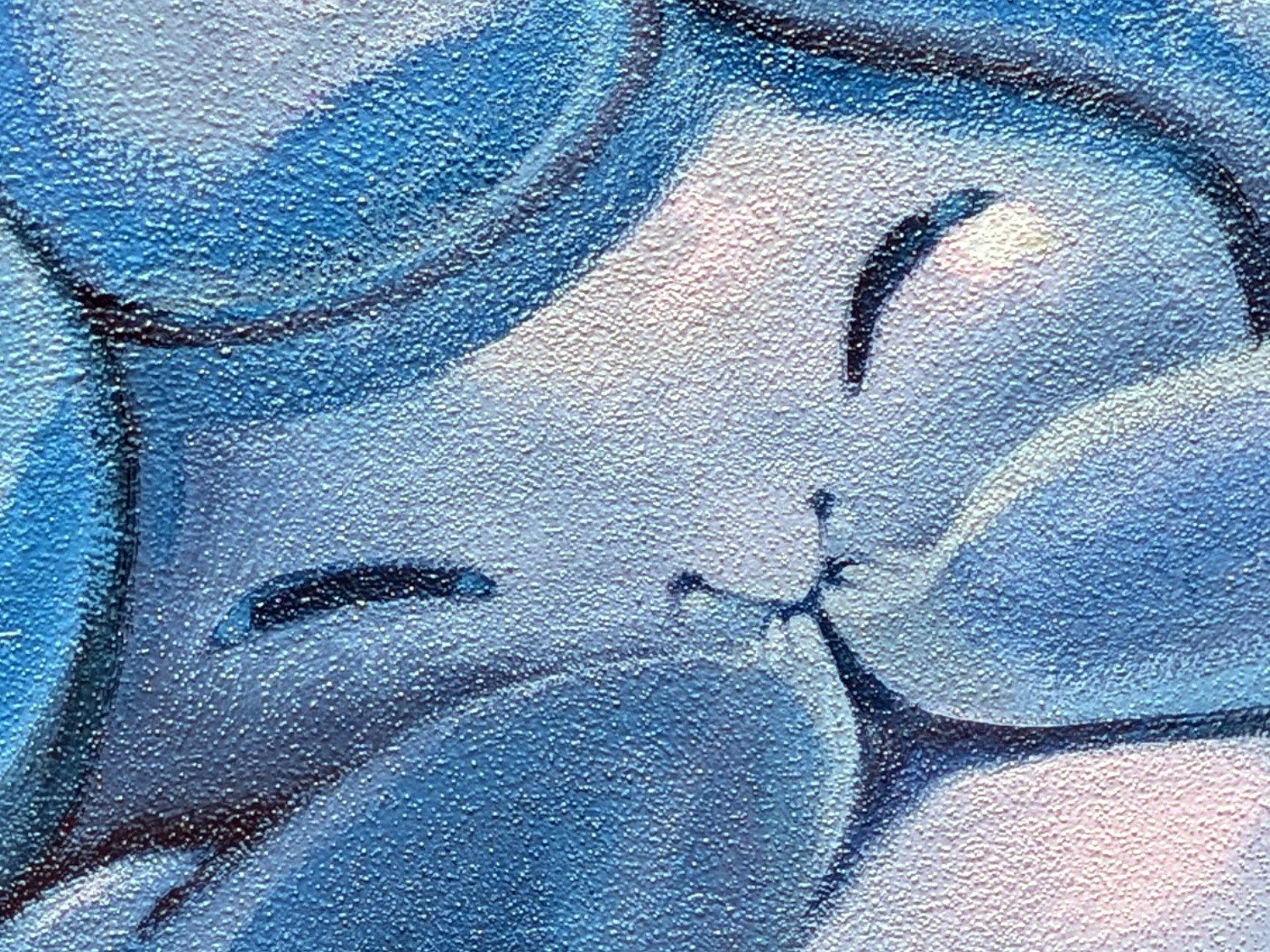
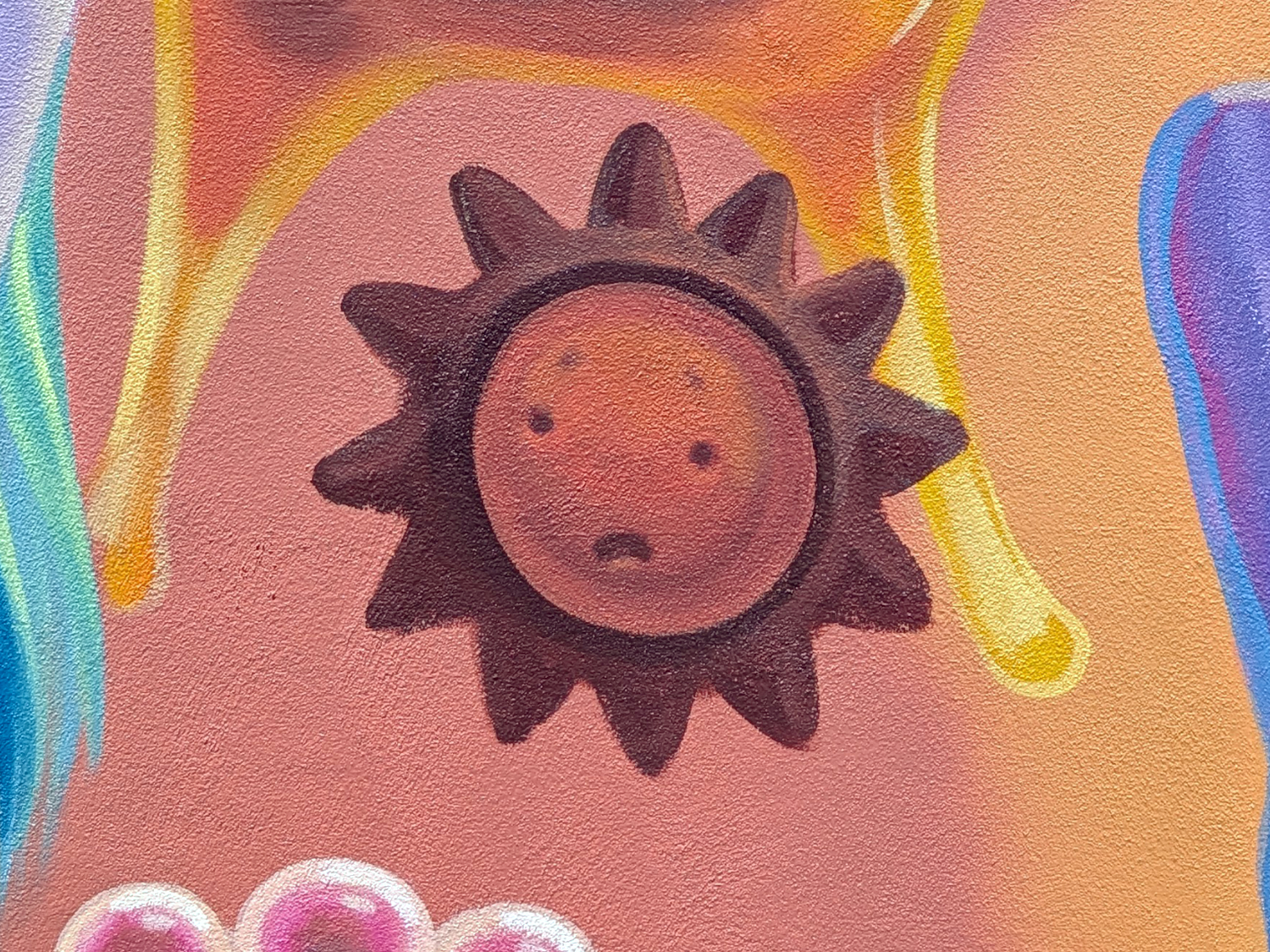
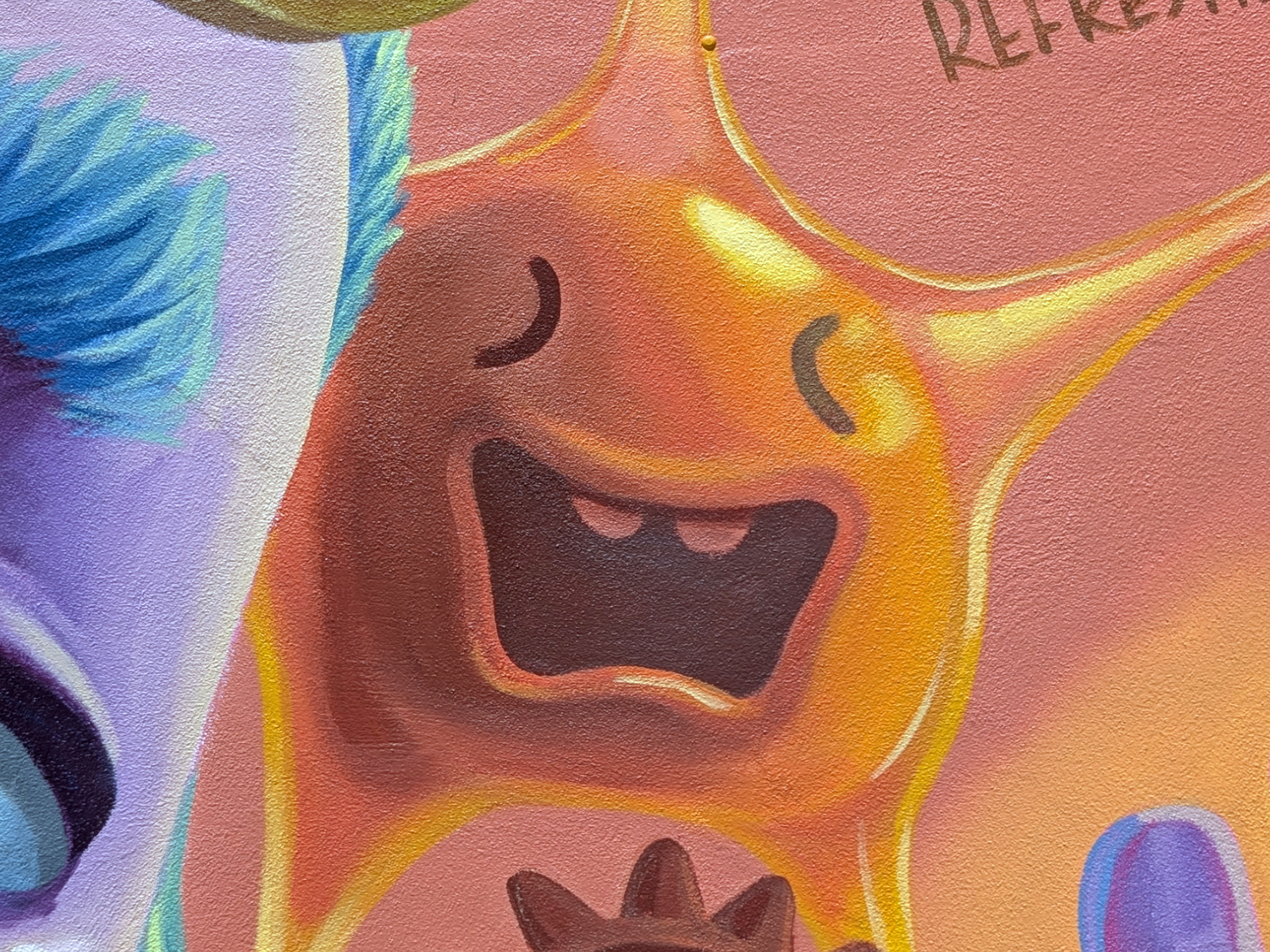
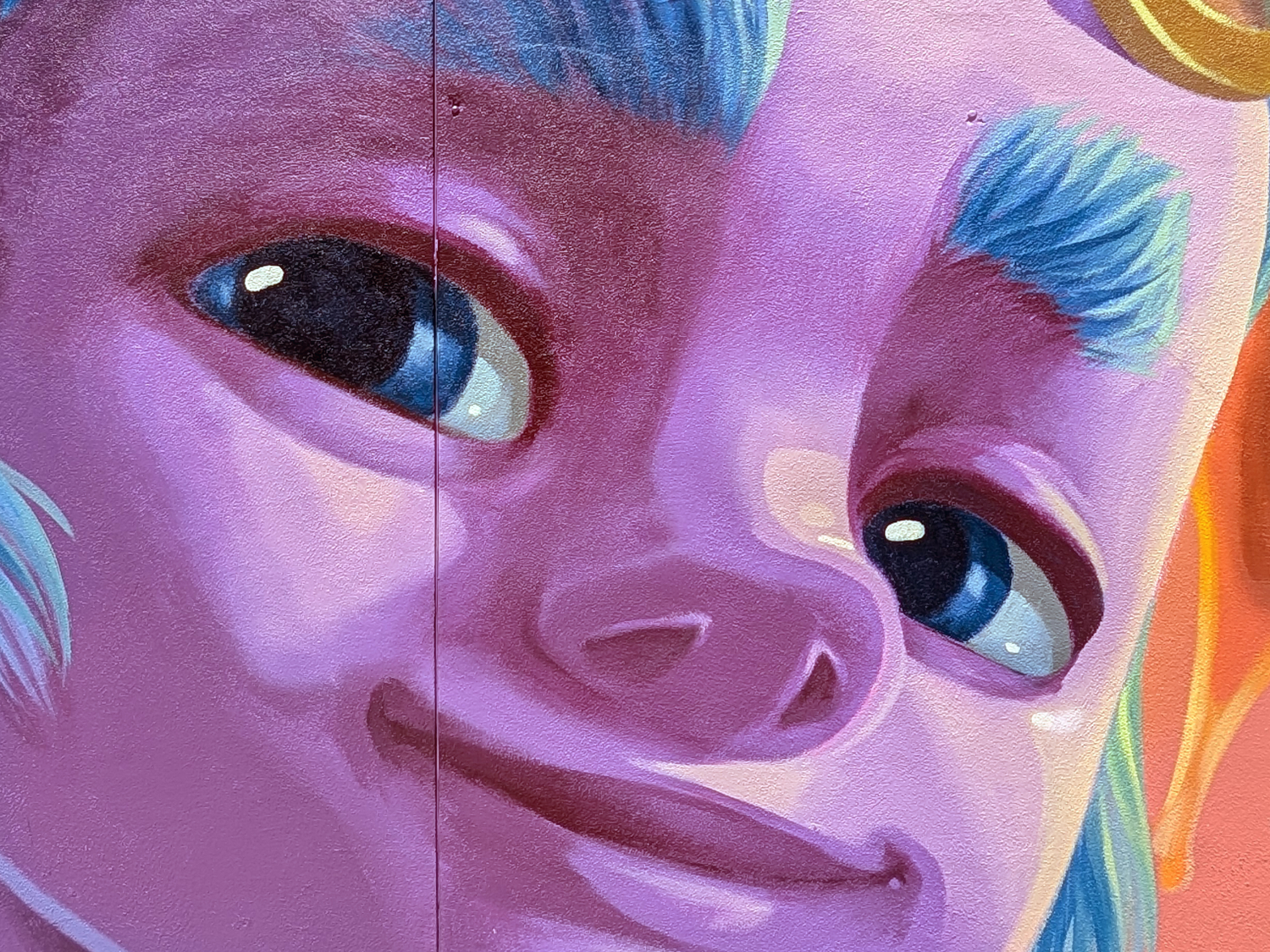
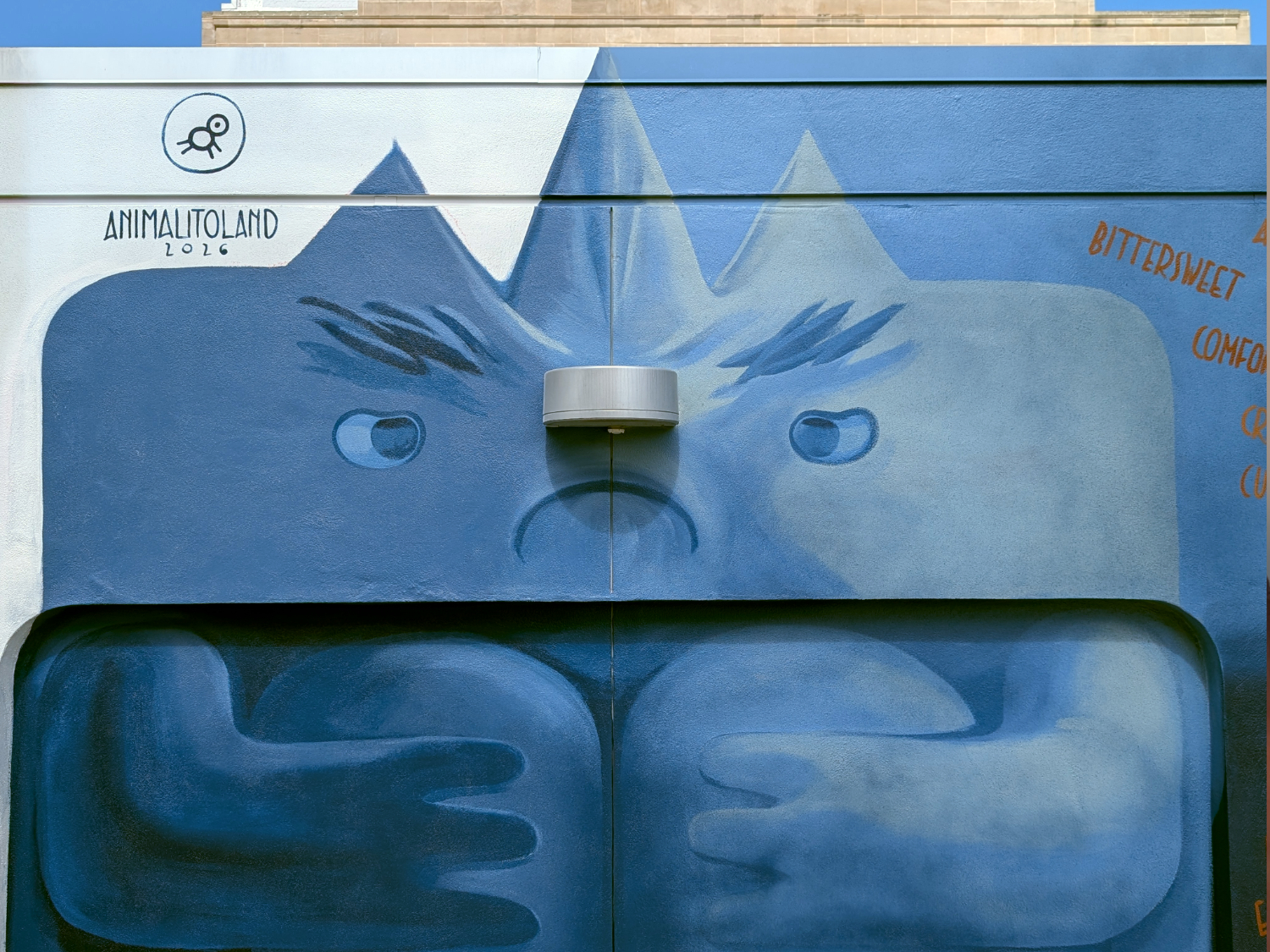
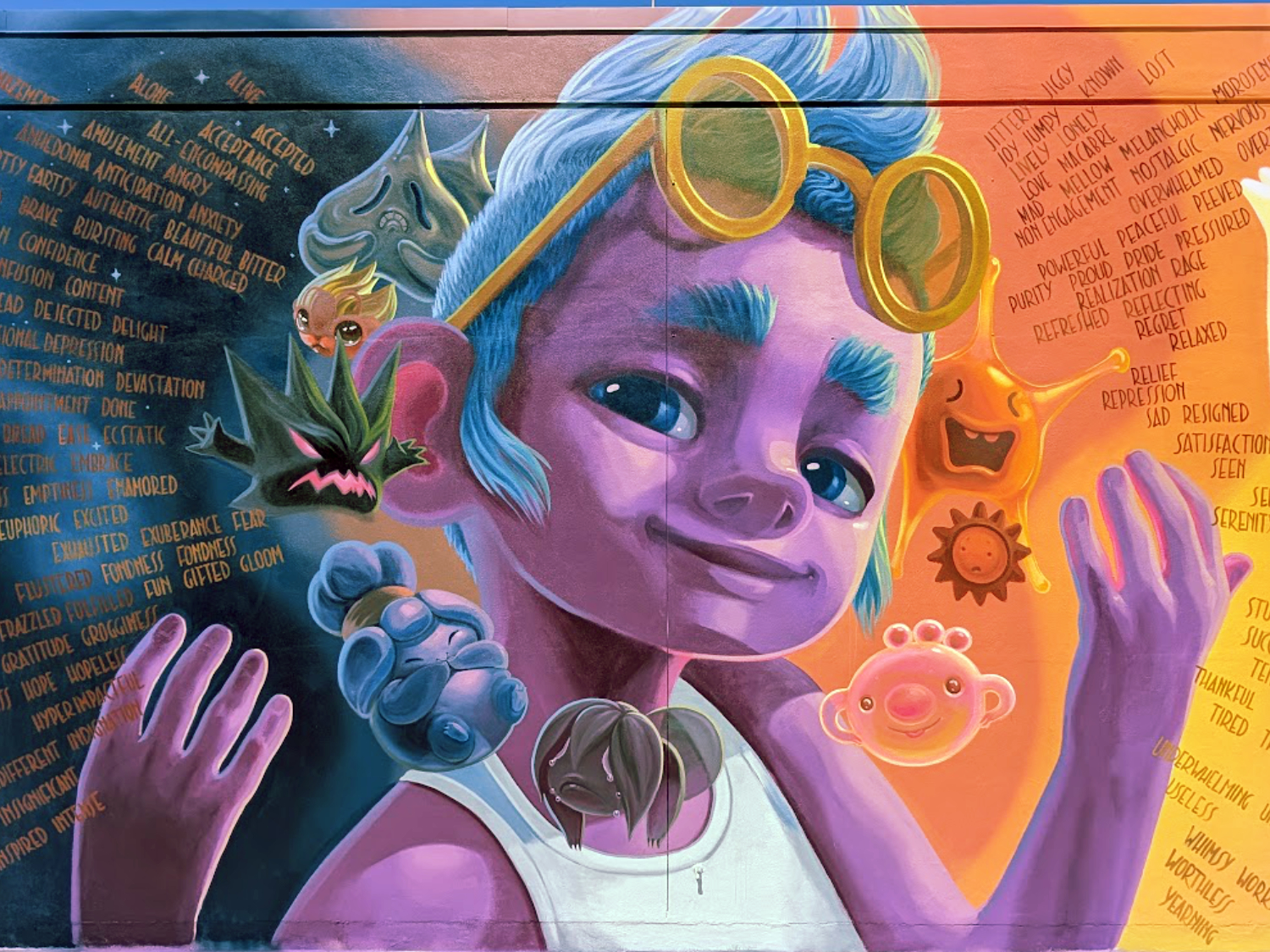
The mural brings private internal storms onto the wall. By giving physical shape to what is usually unsaid, the painting becomes a common reference point. At its center, a figure representing the community stands surrounded by an orbit of emotions.
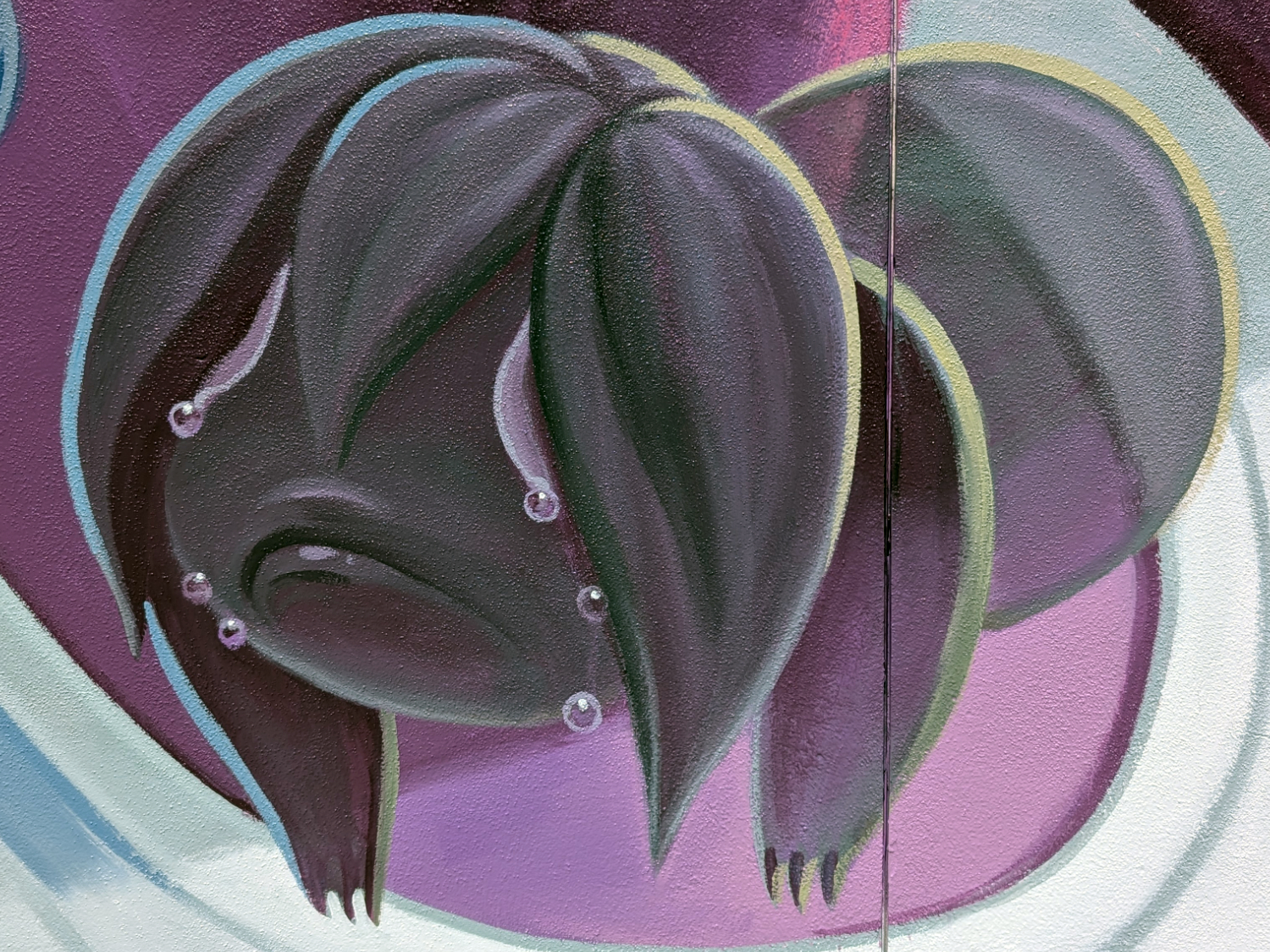
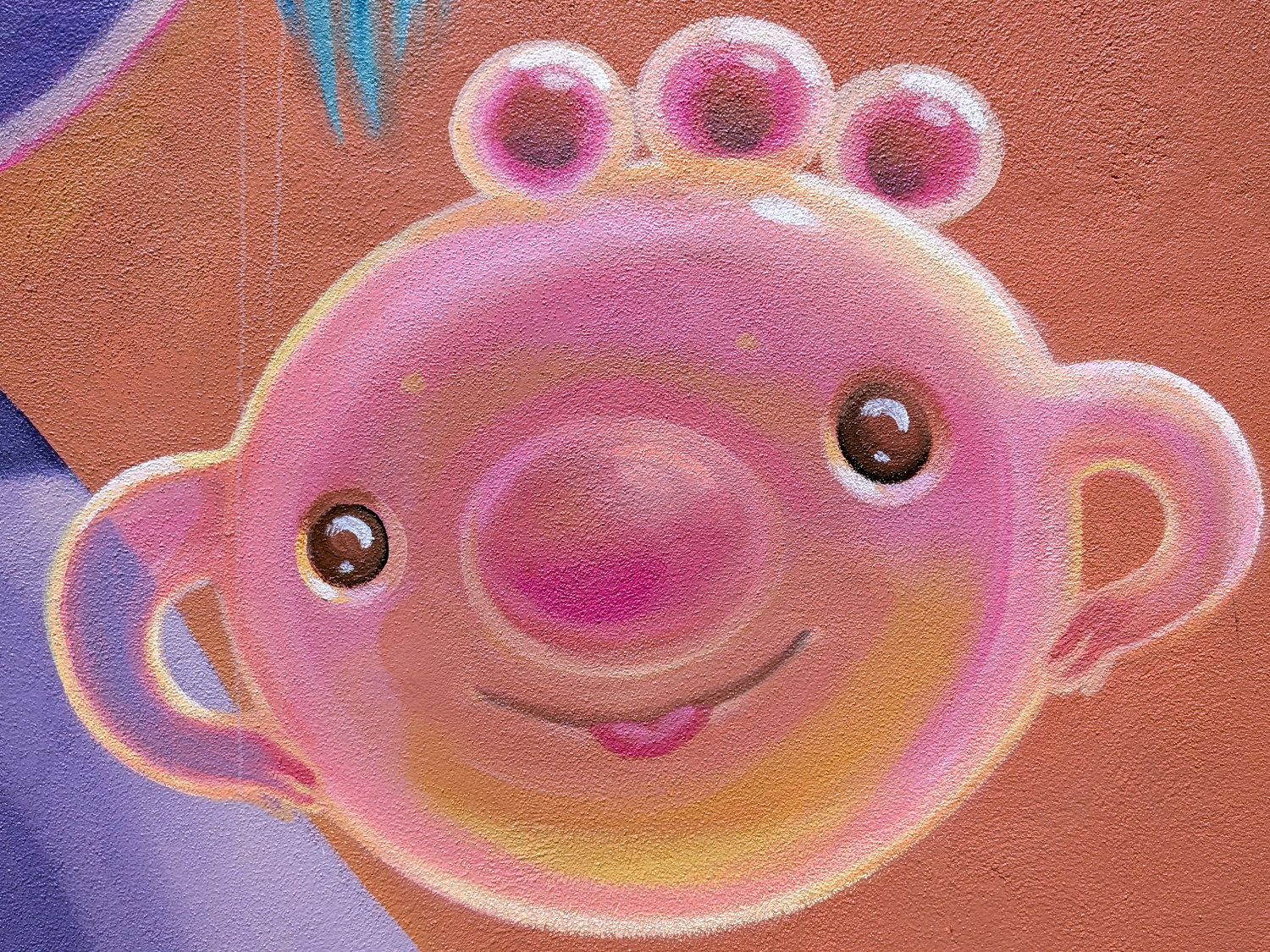
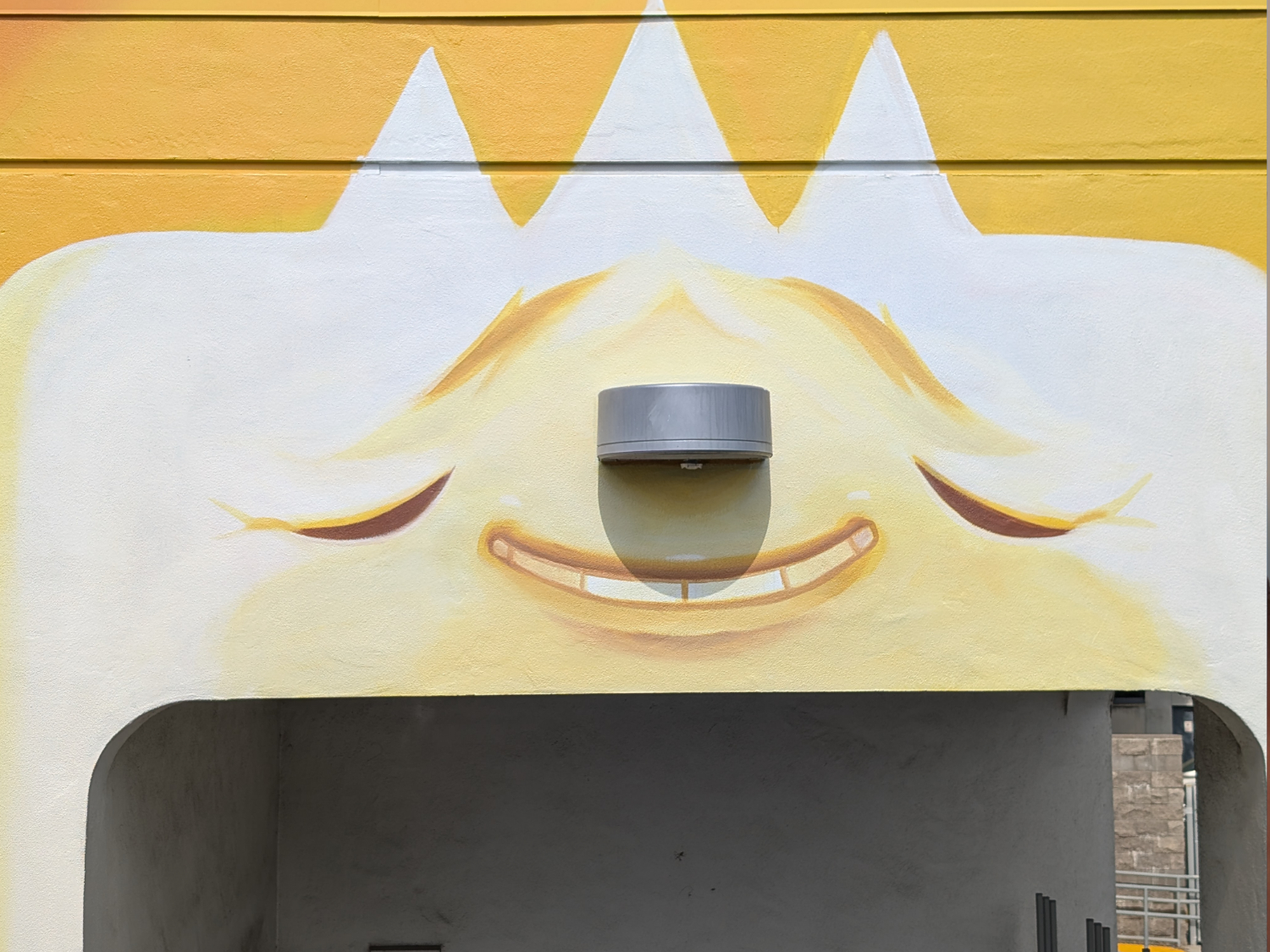
During the painting process, a visitor asked about the main character’s eyes. That conversation changed the work: Instead of making eye contact, I painted the gaze just beyond the viewer’s shoulder. The character isn’t looking at you. They’re looking at the emotions hovering around you, just as their own emotions orbit around them. The architecture of the wall also shaped the narrative. Two existing arches became anchors for secondary characters representing forces beyond our control. One neighbour noticed that the melancholic figure occupied the sealed brick arch while the joyful figure stood within the open passage, “letting people in and out”. It was a beautiful interpretation I hadn’t consciously planned: darkness held in stillness, and joy connected to movement and exchange. By the end of the festival, the school porter told me the wall had become a personal dashboard for her emotions. Throughout her shift, she could always look at it and point to a character that matched her changing states
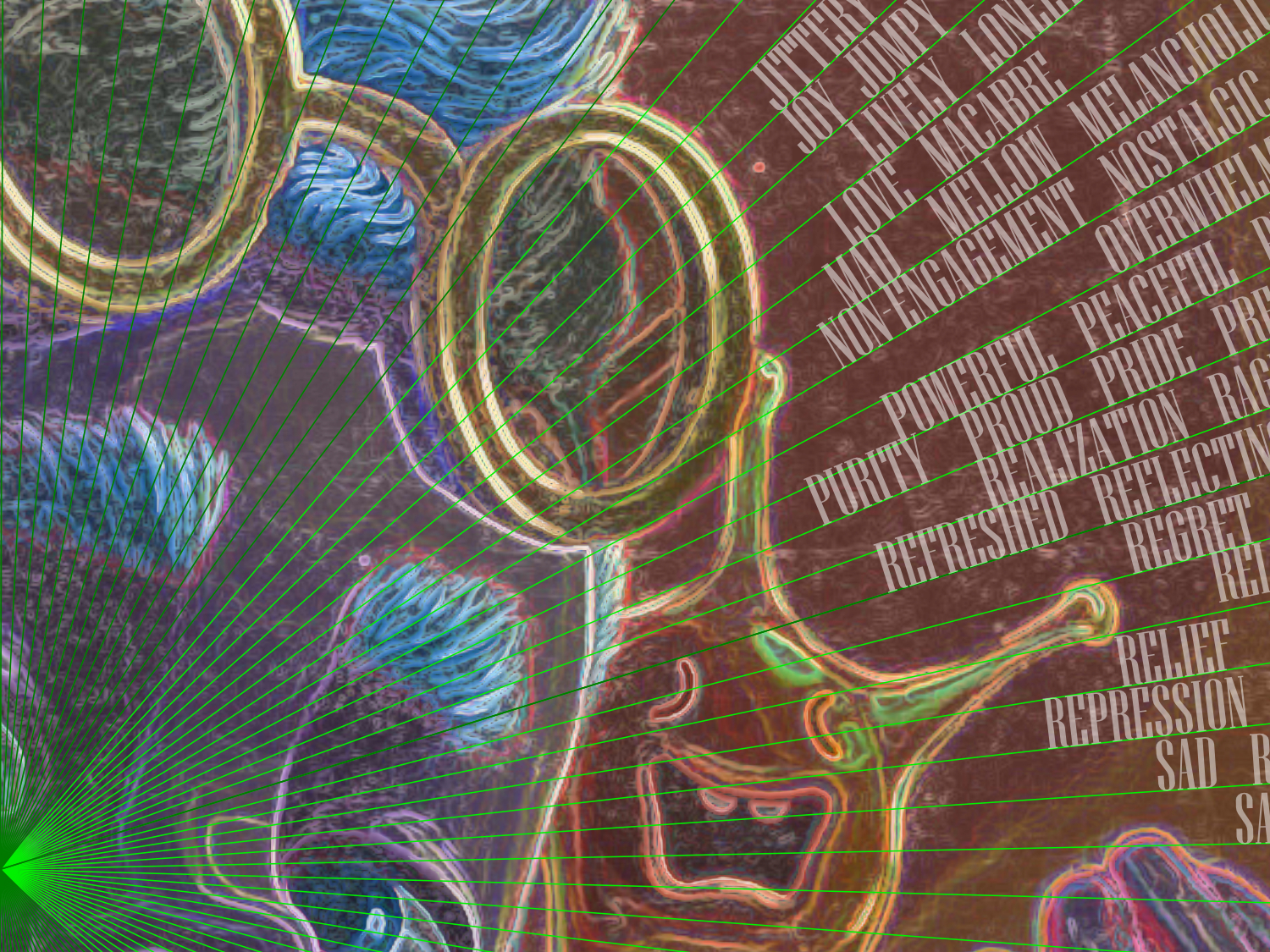
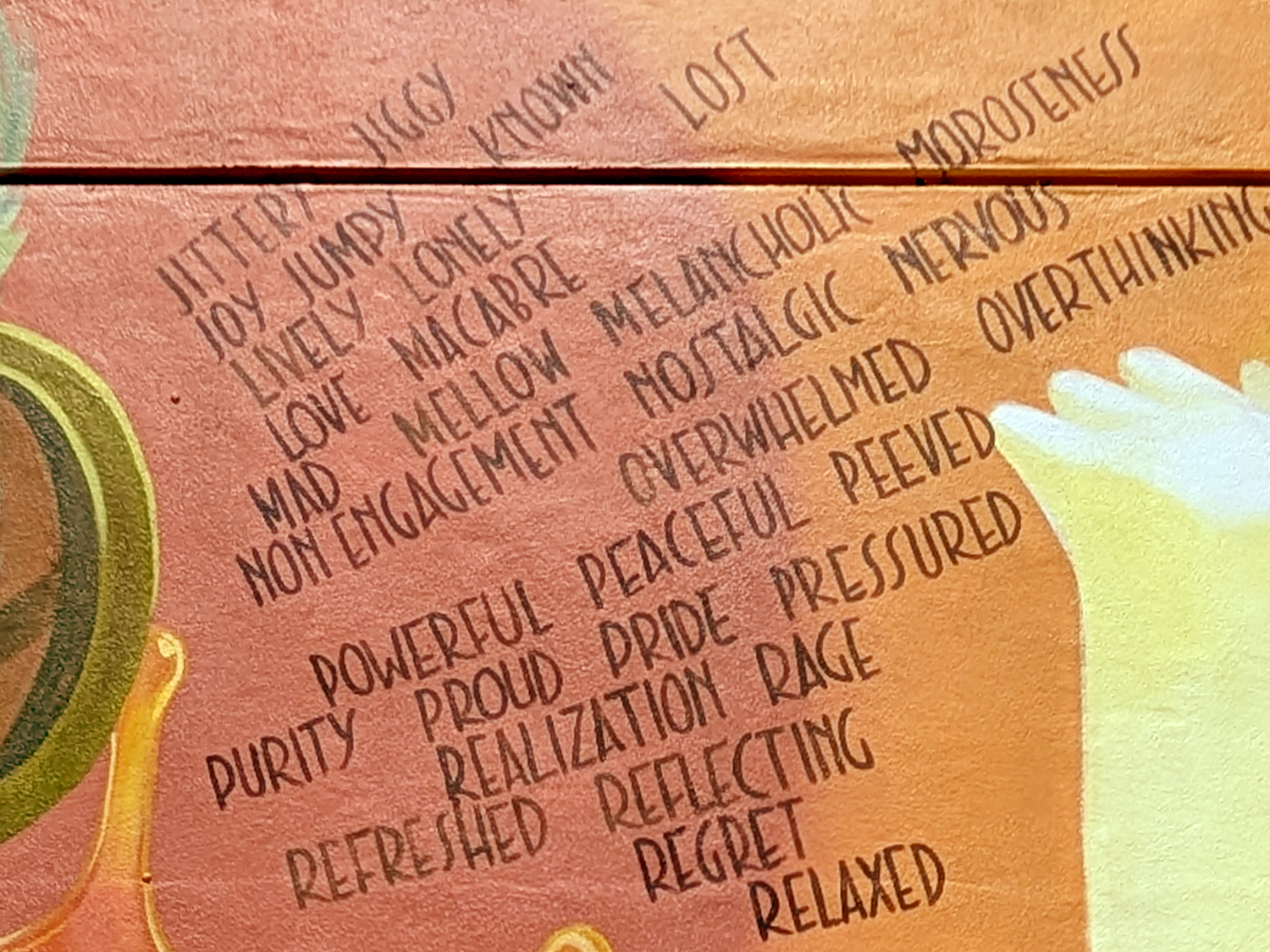
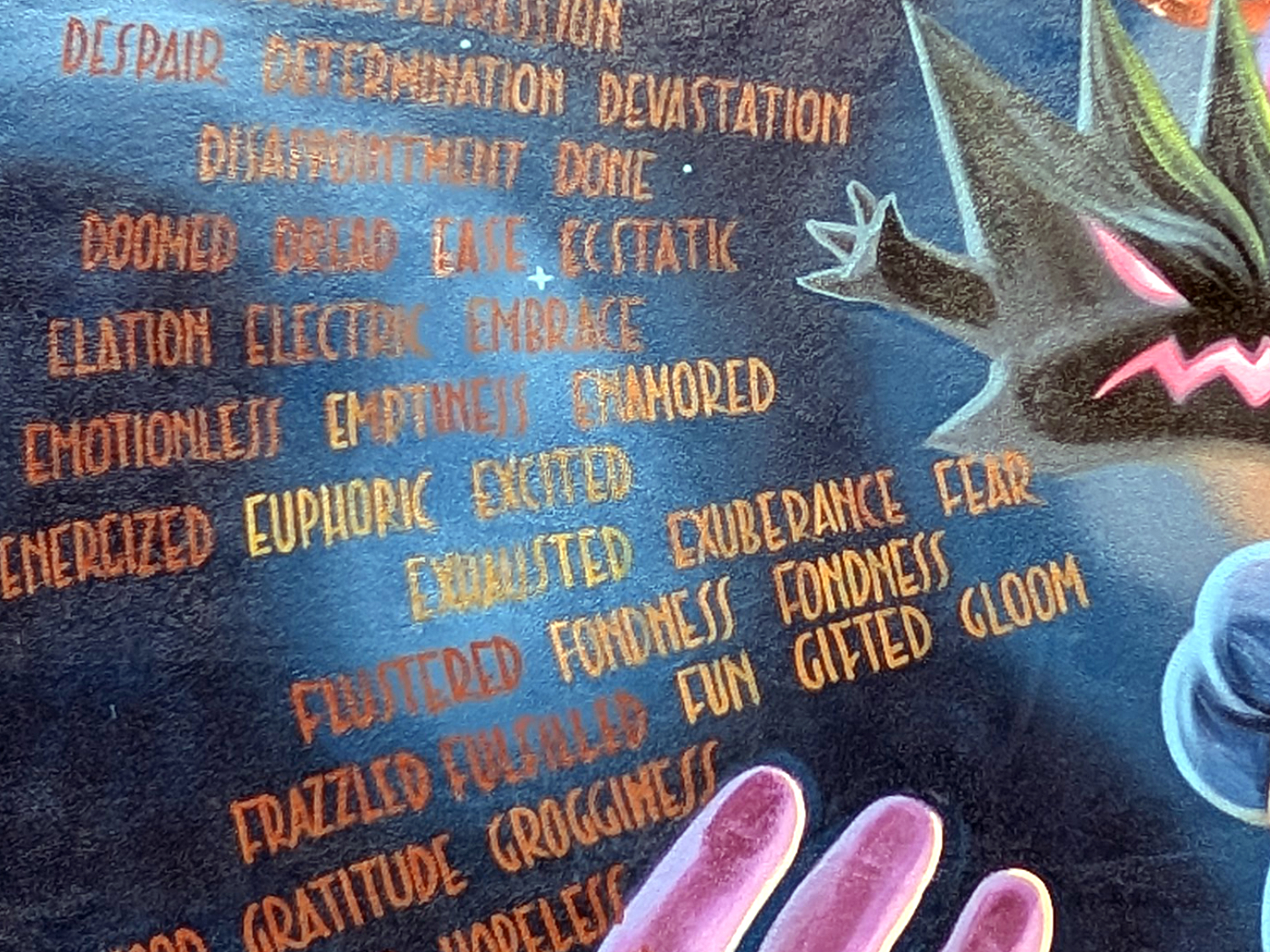
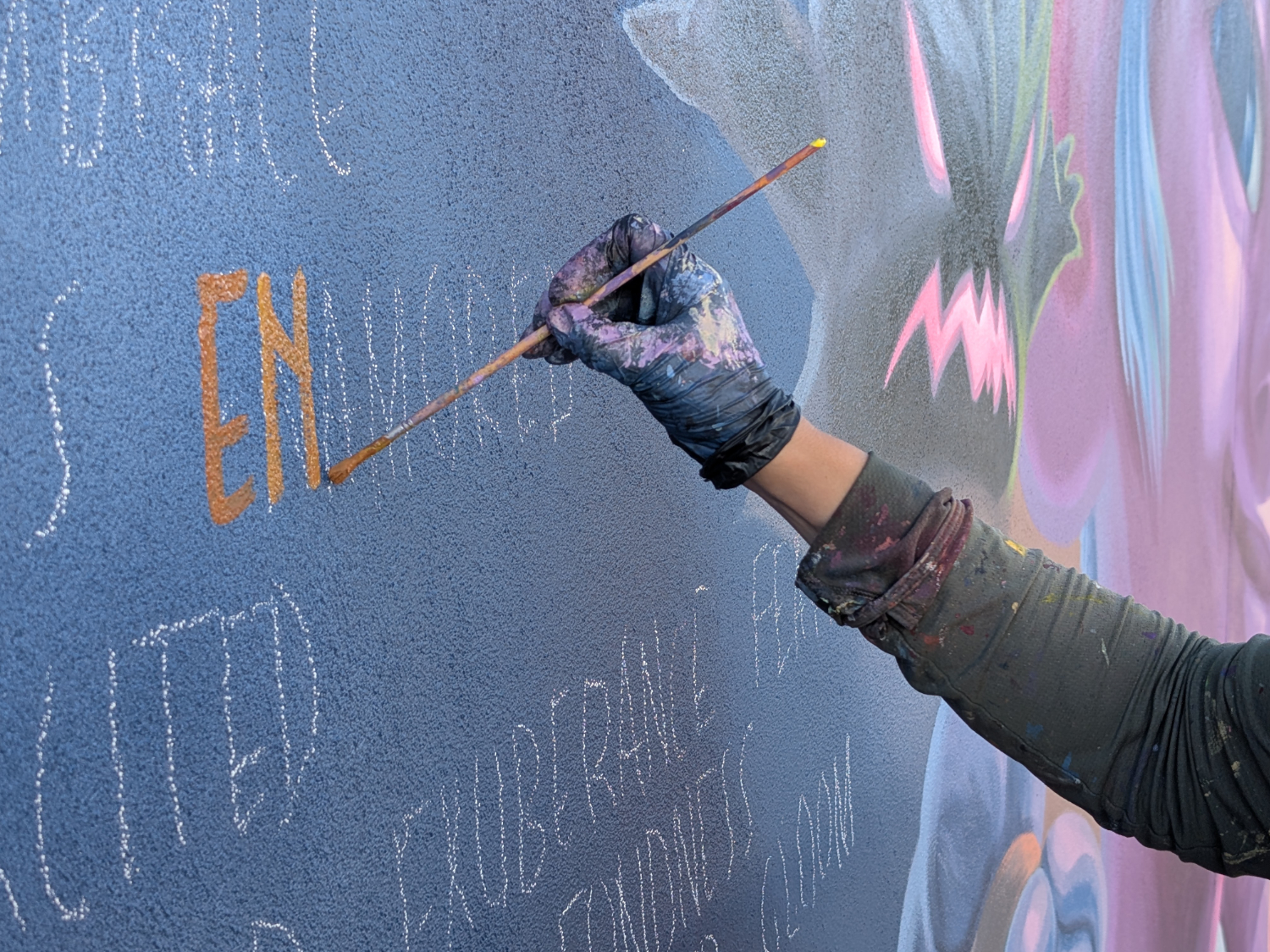
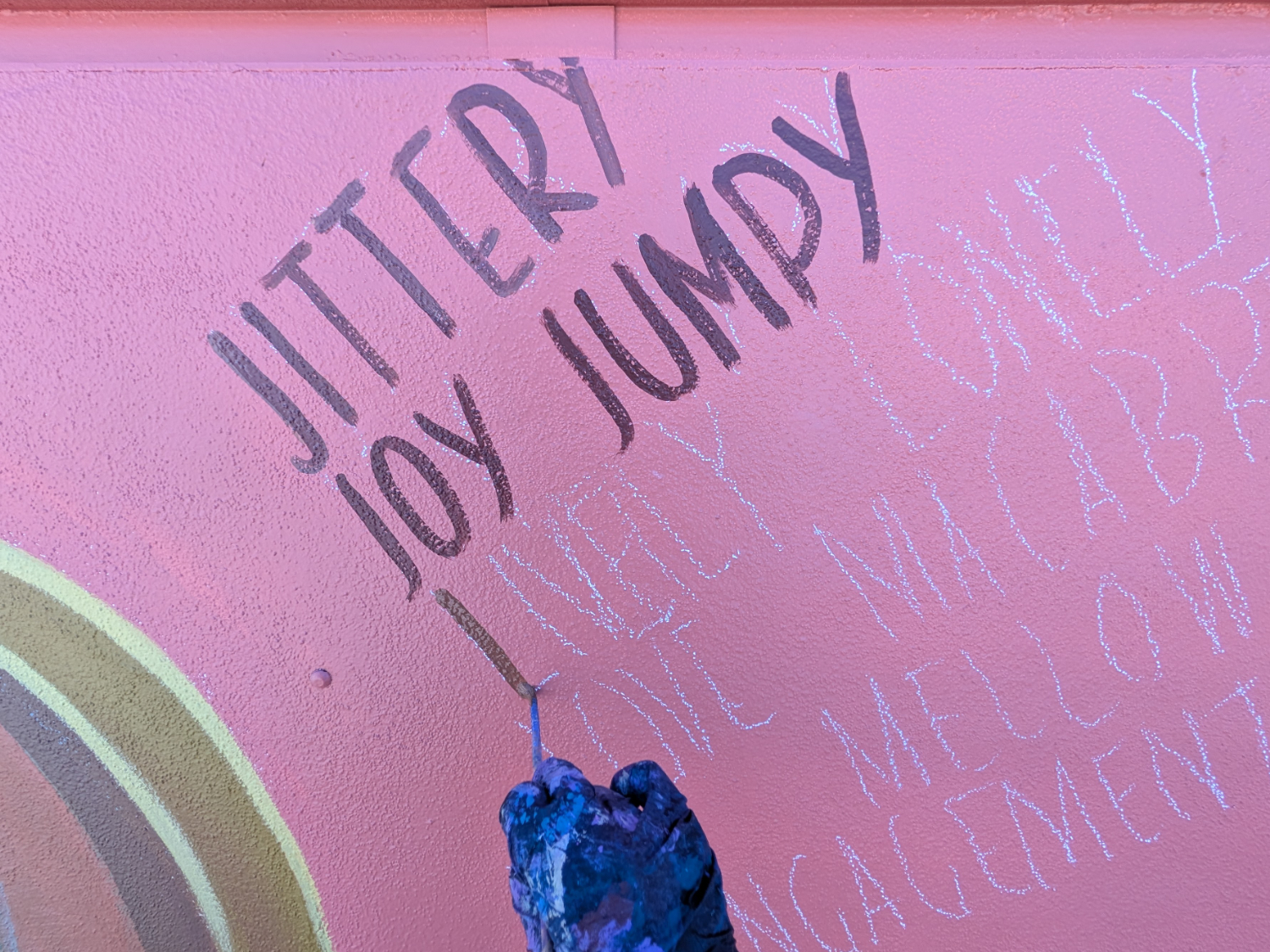
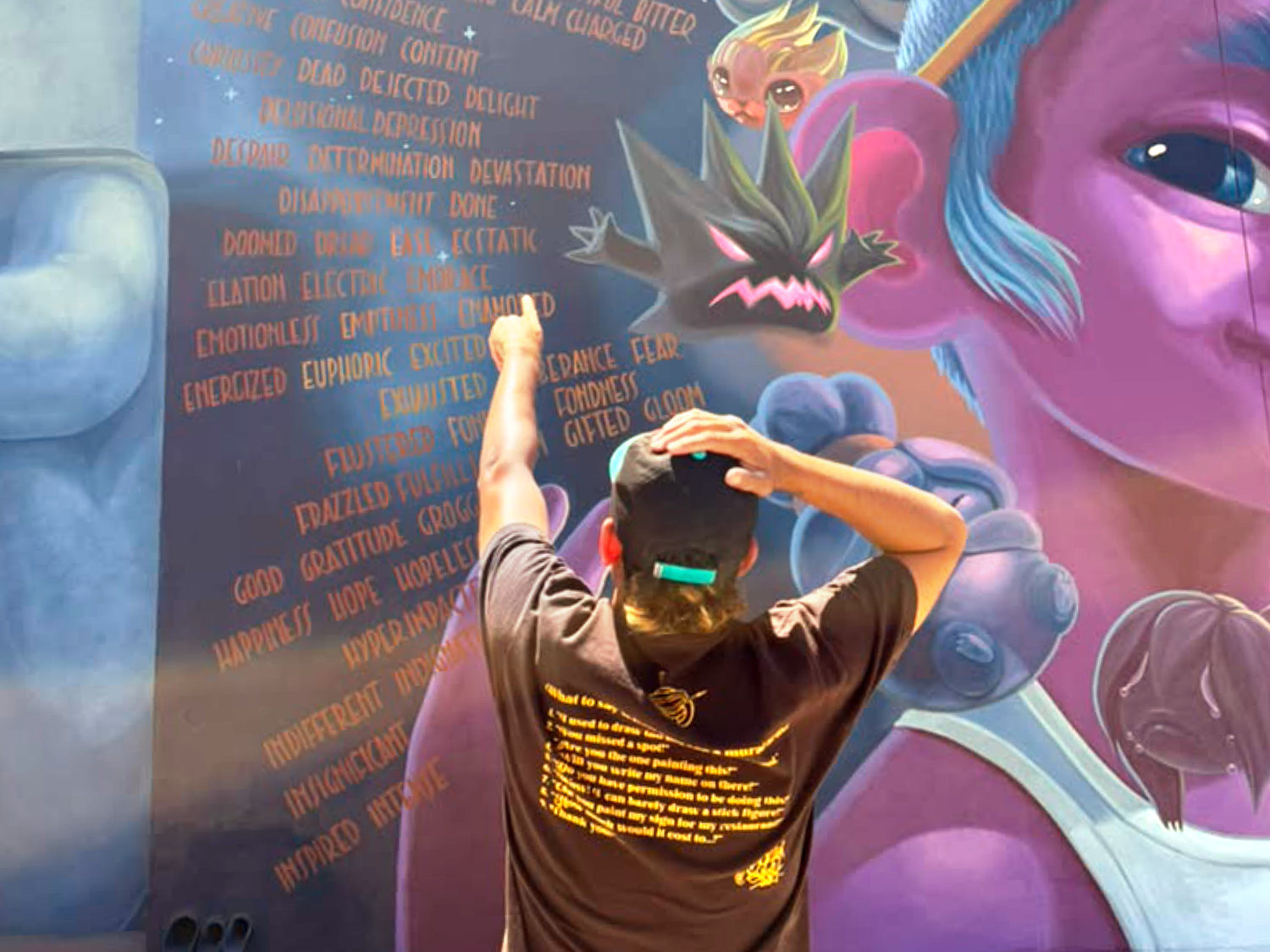
To integrate the shared words into the mural, I built a grid of concentric rays that followed the rhythm of the characters. This structure helped me organize the list of emotions into visual masses and textures. The result works on two levels: as part of the image itself, and as an archive of our encounter on the street. That balance between the tangible and the digital was also shaped by late-day conversations about art and technology with the festival’s film crew, whose insights stayed with me as I approached the final steps.
I used VR for the first time to project this text over the almost-finished-mural. Looking through the digital lenses, the sharp lines overlapping the painted characters produced a strange vibration, like standing in the threshold between an old celluloid film projection and a screen. It felt as if I was painting subtitles or opening credits from a golden cinematic era. Los Angeles is deeply marked by these vestiges, where traditional sign painting still thrives. I thought of two close friends here who practice that craft with absolute patience, a beautiful contrast to me trying to brush one hundred and thirty-seven words onto the wall before sunset.
As I painted words that came from others, in a language that is not my own, I found myself thinking about the weight of those letters and the lives that gave them meaning.
Collective Word Cloud
This word cloud visualizes the emotional vocabulary contributed throughout the project. Words are scaled and color-coded according to how often they appeared. Displaying the frequency of each word reveals the places where many different inner worlds briefly met.
15+ hits
4 - 10 hits
1 - 3 hits
Insights
The Fear of Numbness outweighs the Fear of Pain
When looking at what the community fears, the entries did not primarily center on sharp, active emotions like anger or sadness. Instead, the board was dominated by quiet states where feeling itself seems to disappear: Emotionless, Empty, Numb, Indifference, and Stuck. One participant specifically noted Anhedonia (the loss of joy in everyday things). Our deepest collective anxiety may not be suffering, but losing the capacity to feel altogether.
Connection as an Antidote to Exhaustion
A heavy somatic weight anchored the present moment. Many participants described a profound physical depletion, leaving words like Tired, Exhausted, and Done in massive, bold chalk lettering that demanded space. Yet, when looking at what people longed for, the answers rarely centered on rest. Instead, the aspiration board was a collective cry to be Seen, Known, Understood, and Accepted. Perhaps there is a clue here: sometimes what we need is not simply to stop, but to feel genuinely witnessed by others.
The Emotional Cocktail
Our inner lives are rarely linear, a truth that emerged vividly across both our physical and digital spaces. In the digital emotional journals, participants described the complex friction of public vulnerability with expressions like Reserved Joy or a Heart-Pounder, moments where Anxiety and Excitement, or Relief and Overwhelm, occupy the exact same second. On the chalkboards, this same complexity translated into raw overlaps, where Bittersweet and Melancholic marks sat directly alongside playful drawings and sparks of Hope. These are not contradictions to be fixed, but the actual volume of human experience. We can be deeply exhausted and profoundly inspired at the very same time.
If these walls could talk…
Maybe they can. But first, they have to listen.
A mural is fundamentally incomplete without the people who inhabit its space. While a finished piece may look beautiful in an isolated photograph, its real vitality exists in the conversations, encounters, and small acts of participation that unfold around it while it is being made. Collecting hundreds of unique emotional testimonies revealed something simple but profound: every person passing these walls carries an internal landscape that is far richer than what is visible from the outside.
By enlarging these words and placing them in public space, private emotional experiences become part of a shared landscape. Standing in front of the mural, it becomes difficult to know where one person’s emotions end and another’s begin. Perhaps that is enough. Not to resolve what we feel, but to realize we were never feeling it alone.
Credits & Acknowledgments This project was built alongside the incredible family at Long Beach Walls and the collaboration of Renaissance High School for the Arts. Documentary and process photography by Cesar, alongside personal archive photos.